

Why can I hear but not understand speech? Hearing a voice and understanding its words are different tasks. Your ears detect sound, while your brain uses auditory information, language and attention to make sense of a conversation. Hearing loss, listening conditions and auditory processing difficulties can all affect clarity.
If you hear but not understand people in restaurants, meetings or family gatherings, your experience deserves attention. A normal hearing screening does not necessarily explain every listening difficulty. This guide covers possible causes, useful assessment questions and five practical ways to make conversations easier.
Why You May Hear but Not Understand Speech
There is no single explanation for why you hear but not understand speech. Some people miss quiet parts of words; others find it harder to follow fast speech or several speakers at once. The setting matters too: distance, background music and echo can make a conversation difficult even when the speaker seems loud enough.
Hearing loss and reduced speech clarity
Even mild hearing loss can reduce access to speech sounds. You may notice a person’s voice but miss the details that distinguish similar words. Turning up the volume may make speech louder without solving every clarity problem. A comprehensive hearing test helps establish your hearing sensitivity and guides the next step.

Auditory processing difficulties
Auditory Processing Disorder (APD) concerns how the central auditory system processes sound. However, difficulty following conversation alone does not establish an APD diagnosis. Attention, language and hearing factors can overlap, so assessment should consider the whole picture. ASHA explains this distinction in its clinical overview of central auditory processing disorder.
Changes after concussion or head injury
Some people notice more listening effort, fatigue or difficulty following conversations after a concussion. Tell your healthcare team when the change began and which situations are most difficult. Our article on auditory processing difficulties after concussion discusses this topic further.
Background noise and competing demands
In a quiet room, a single voice may be easy to follow. In a busy restaurant, several voices compete with music, dishes and other sounds. Following a conversation while doing another task adds another demand. If you hear but not understand speech mainly in these situations, describe that pattern during your appointment.
Common Signs When You Hear but Not Understand
Look for recurring patterns rather than one missed sentence. Examples include:
- People seem to mumble, even when they speak at a comfortable volume.
- You often ask someone to repeat or rephrase a sentence.
- You miss names, numbers or key words during a conversation.
- Group discussions are harder than one-to-one conversations.
- You feel tired after meetings or social gatherings.
- You struggle in noise despite a previous normal hearing test.
These observations help explain your experience; they are not a diagnostic checklist. Keep a brief record of where communication breaks down, whether one ear seems different and how long the problem has been present.
What If You Hear but Not Understand After a Normal Hearing Test?
A hearing test and an everyday conversation place different demands on you. A result within the normal range on a basic test should not end the discussion if you still struggle. Ask what the previous test measured and whether further assessment would address your concerns.
Depending on your history and initial findings, an audiologist may recommend speech testing, testing with background noise or a more detailed assessment of auditory processing. An APD evaluation is individualized; not every person who has difficulty in noise needs the same tests. Referral to another professional may also be appropriate.
Bring previous results, a list of your questions and examples from work, home or school. Useful questions include: “How well do I understand speech in noise?” and “What could explain the difference between my test result and daily experience?” Ask the clinician to explain both the findings and any remaining uncertainty.

Prepare a short listening diary
Before your appointment, write down three recent situations in which you could hear but not understand the words. Describe the room, the number of speakers and any background sound. Note whether you could see the speaker’s face and whether moving closer made the message clearer. Specific examples are more useful than simply saying that your hearing is “bad.”
Also record situations that go well. For example, you may follow a quiet conversation easily but miss details during online meetings. Comparing the two settings gives you and your clinician a clearer starting point. You do not need to score yourself or decide which diagnosis fits.
Choose a communication goal
Pick one everyday activity you want to make easier, such as following a family dinner, understanding a colleague or watching a programme with someone else. Explain what usually goes wrong and what a useful improvement would look like. This keeps the conversation focused on your daily needs.
After your assessment, ask for a plain-language explanation of the recommendations and how progress will be reviewed. If a strategy or device is suggested, ask which situation it is intended to help with. Make sure you understand how to try it and who to contact if it does not address your concern.
If you still hear but not understand in the situations that matter most to you, bring those examples to the follow-up visit. A clear test result and a useful communication plan should be discussed together.
Practical Tips When You Hear but Not Understand
Try these adjustments in everyday conversations and note which ones help most:
- Reduce competing sound. Turn down the television or move away from speakers and busy kitchen areas before starting an important conversation.
- Face the speaker. Choose a well-lit place where you can see the person’s face, and move closer when comfortable.
- Ask for rephrasing. Instead of only saying “What?”, explain which part you missed: “I heard the time, but not the meeting place.”
- Take turns speaking. In a group, ask people to speak one at a time. Brief pauses can give you time to follow changes of topic.
- Confirm important details. Repeat back names, dates and instructions, or ask for a written message. Captions can also support video conversations.
These changes support communication while you investigate the cause. If you continue to hear but not understand speech, discuss a personalized plan with an audiologist. Hearing technology or other support should be selected according to your assessment and goals.
Everyday Situations: Turning Listening Tips Into Action
The following examples are practical communication ideas, not diagnostic tests or promises of treatment. Use the situations that match your life. If you hear but not understand in a particular setting, changing one feature at a time can help you describe what makes a difference.
At a restaurant or family celebration
Before ordering, ask whether a table away from music speakers or a busy service area is available. Sit where you can see the people you most want to speak with. When several conversations overlap, it is reasonable to focus on one person instead of trying to follow the entire table. Explain your preference before the conversation becomes frustrating.
If you hear but not understand a question, ask for the specific missing part. For example: “Were you asking about Saturday or Sunday?” This gives the other person a clear way to help. For an important discussion, suggest continuing somewhere quieter. A celebration does not have to become a test of how much conversation you can manage.
During a work meeting
Ask for an agenda ahead of time so that names, topics and technical terms are familiar. Choose a seat with a clear view of the main speaker. If you hear but not understand contributions from across the room, ask the chair to repeat the question before answering it. One speaker at a time helps everyone follow the discussion.
Before the meeting ends, confirm the decisions that affect your work. A useful phrase is: “To check that I followed correctly, I am sending the draft on Tuesday.” Ask for key actions in writing when appropriate. You can request a practical adjustment without sharing a diagnosis or detailed medical history with the whole group.
On a phone or video call
Check the connection and whether the other person’s microphone is clear. If the audio breaks up, ask them to reconnect or change location. On a video call, use captions if available, but check important information because automated captions can make mistakes. Typed names and numbers can prevent misunderstandings.
If you hear but not understand phone conversations more often than face-to-face speech, include that example in your listening diary. Note whether the issue occurs with every caller or only on a particular device. This does not diagnose the cause, but it makes your description more specific than “phone calls are difficult.”
At home with a partner or family member
Agree on a simple routine for important conversations: get the person’s attention, pause competing audio, and speak from the same room. Calling instructions from another floor makes clarification harder. Choose a time when both people can take part, especially for plans involving appointments, money or travel.
When you hear but not understand, say what you caught rather than starting the whole exchange again. For example: “I know you mentioned the appointment; was the change to the time or the place?” Family members can also ask which approach helps you most instead of assuming that louder speech is always better.
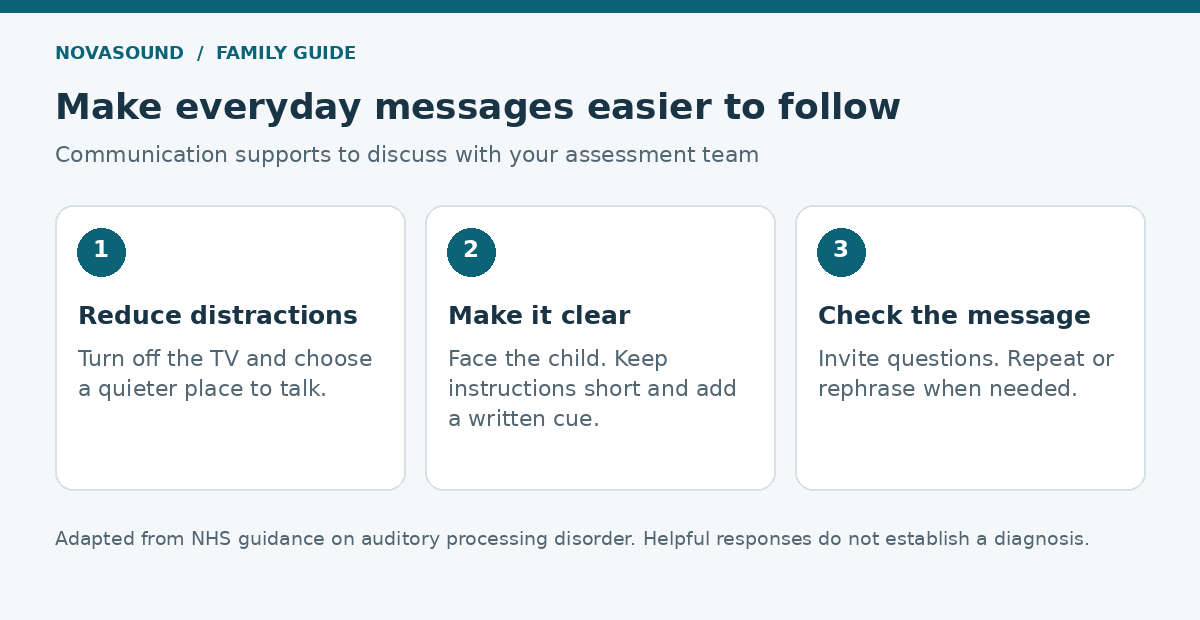
How Conversation Partners Can Help
Communication is shared work. If someone tells you “I hear but not understand,” take the difficulty seriously without trying to label its cause. Ask whether they would prefer a quieter location, a different explanation or a written note. Their preference may change with the situation, and asking is usually more useful than guessing.
Start by getting their attention and facing them. Use a natural speaking style and leave a short pause between ideas. When a message is missed, try saying it another way. Repeating exactly the same sentence more loudly may not answer the part that was unclear. Avoid comments such as “You are not listening” or “Everyone else heard it.”
For a longer explanation, give the main point first and then add the details. If you are describing a route, appointment or task, ask what needs clarification. Confirm the final plan together. This is a way to prevent errors, not a test of memory or a reason to embarrass the listener.
If a child appears to hear but not understand instructions, share specific observations with the family and appropriate professionals. Describe the task, the setting and the response rather than assuming carelessness. See our article on auditory processing and learning challenges in children for related information.

Hear but Not Understand? Questions for Your Appointment
Bring a few priorities rather than trying to remember every detail during the visit. If you hear but not understand speech, these questions can help you and your clinician agree on what the assessment should address:
- What did today’s tests measure? Ask how the findings relate to your everyday concerns and which situations the tests did not reproduce.
- What remains uncertain? Find out whether further testing, a referral or a period of observation is appropriate for your history.
- Which change should I try first? Ask for a recommendation linked to a specific activity, such as meetings, classroom instructions or telephone calls.
- How will we judge whether it helps? Agree on a practical outcome and when you should report back.
- What should prompt an earlier review? Ask whom to contact if symptoms change rather than waiting for the next scheduled visit.
You can also ask for the recommendations in writing. If you hear but not understand part of the explanation during your own appointment, say so. Asking the clinician to slow down, rephrase or write a term is a reasonable part of receiving care.
Reviewing Progress Without Guessing the Diagnosis
After trying a recommended adjustment, return to the everyday goal you chose. Was the conversation easier to follow? Did you need fewer repetitions, or were the important details clearer? Write down an example of what changed. Avoid treating one good day or one difficult evening as proof that the whole problem is solved or worsening.
For example, someone who used to hear but not understand team discussions might find a written agenda helpful while still struggling with overlapping speech. Both observations matter. Keep the useful adjustment and describe the remaining difficulty at follow-up. You do not have to abandon a helpful strategy because it does not solve every situation.
If a device or listening programme is recommended, ask about its purpose, expected limitations, cost and review arrangements before deciding. Discuss which situations it is meant to support. Do not assume that a product advertised for “clearer hearing” is suitable for every person who can hear but not understand speech.
The aim is a plan that matches your needs. Persistent difficulty deserves a clear explanation of the next steps, including when another professional’s input might be useful. Your report of daily communication belongs alongside the test results throughout that process.
When Should You Seek Help?
Arrange an assessment if you hear but not understand often enough to affect work, relationships or participation in social activities. You do not need to wait until conversations become impossible. Mention any history of head injury, changes in hearing or differences between your ears.
Sudden hearing loss needs urgent medical attention. If your hearing drops suddenly, especially in one ear, seek medical care immediately rather than waiting for a routine appointment. The NIDCD guidance on sudden deafness explains why prompt evaluation matters.
Frequently Asked Questions
Does difficulty understanding speech always mean APD?
No. Hearing loss and other factors can produce similar complaints. APD requires an appropriate professional assessment, and symptoms alone cannot distinguish it from other explanations.
Why can I hear but not understand in a restaurant?
Background noise can cover parts of speech and make it harder to follow one speaker. Try a quieter table and face your conversation partner. If this happens regularly, tell your audiologist about it.
Should I repeat a hearing test if my previous result was normal?
Discuss persistent or changed symptoms with an audiologist. Bring the previous results so they can decide whether updated hearing tests or additional listening assessments would be useful.
Will louder speech solve the problem?
Not always. Clear speech, less background noise and rephrasing may be more useful than shouting. The best approach depends on why understanding is difficult.
Hearing and Listening Support in Halifax
If you hear but not understand speech, Novasound Hearing & Balance Center can help you explore your hearing and listening concerns. Learn about our APD assessments and treatments or book an appointment to discuss an appropriate assessment.
Visit us at #22, 2625 Joseph Howe Drive, Halifax, NS, or call 902-444-7788. Bring specific examples of difficult listening situations so we can discuss your priorities.
This article provides general education and does not replace an individual hearing or medical assessment.