
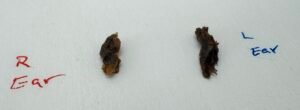
A real example of earwax in early childhood
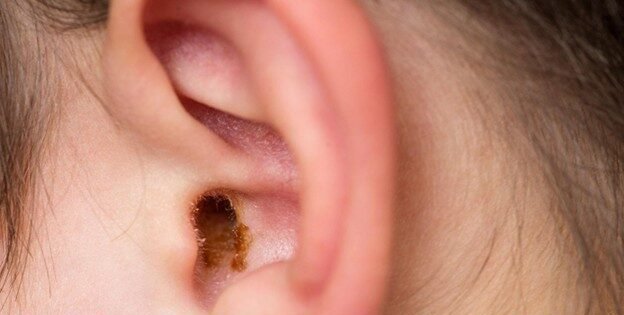
How earwax in early childhood affects hearing
Earwax itself is normal and protective. However, when it becomes impacted or occluding, it can act like a physical barrier to sound.
In young children, even a mild reduction in sound clarity can have a bigger impact than in adults because:
- Their brain is still developing listening pathways
- Speech and language are actively forming
- Learning relies heavily on hearing clearly (especially in noise)
What happens when sound is partially blocked?
When earwax blocks sound, the child may experience:
- Muffled hearing (like listening underwater)
- Missing parts of speech sounds
- Increased listening effort
- Reduced attention to verbal instructions
Over time, this can lead to inconsistent auditory input to the brain.
The connection to listening and learning difficulties
When hearing is reduced, children may miss parts of conversations and instructions. Persistent speech, language, or learning concerns need their own assessment; earwax alone should not be assumed to explain them.
Speech and language
Children may not hear speech clearly enough to fully learn sound patterns.
Understanding speech
The brain may struggle to:
- Distinguish similar sounds
- Understand speech in noise
Following multi-step instructions may also become more difficult.
Classroom listening
Parents and teachers may notice:
- “Not listening” or needing repetition
- Trouble following directions
- Fatigue during listening tasks
- Falling behind in reading or phonics
Important clarification
Earwax in early childhood is not the same as auditory processing disorder (APD). Blocked ear canals can interfere with hearing, so hearing and ear health should be checked before interpreting ongoing listening difficulties.
If difficulties continue after wax has been managed, ask your audiologist whether further hearing, language, or developmental assessment is appropriate.
Earwax in early childhood: warning signs to discuss
- Frequently saying “what?”
- Turning up volume more than expected
- Not responding when called
- Speech that is unclear for age
- Difficulty hearing in noisy places
- Complaints of “blocked” ears
The good news: it’s manageable
The impact of earwax is often reversible once removed.
At Novasound Hearing and Balance Center, we:
- Assess the ears and recommend suitable professional earwax removal
- Check whether hearing concerns persist after removal
- Monitor listening development
- Provide guidance if further evaluation is needed
When should a child be checked?
We recommend an audiology check if:
- There are listening or speech concerns
- The child has a history of wax buildup
- Teachers report attention or listening issues
- There is frequent ear discomfort or blockage
Safe care for earwax in early childhood
Healthy earwax protects the ear canal, and wax that is not causing symptoms usually does not need to be removed.
Wipe only the outer ear with a soft cloth. Do not insert cotton swabs, fingers, or tools into a child’s ear canal: these can push wax deeper or injure the ear.
Do not use ear candles. Before trying drops or irrigation for a child, ask a qualified clinician what is appropriate, especially if the child has ear tubes, a possible eardrum perforation, or previous ear surgery.
Pain, discharge, or bleeding should be assessed rather than assumed to be wax.
The ENT Health earwax safety guidance explains why objects and ear candles should be avoided. The American Academy of Pediatrics’ earwax guidance also describes when buildup may need attention.
Preparing for a pediatric hearing check in Halifax
A useful first step is to write down what you have noticed. When discussing earwax in early childhood, specific examples help the clinician understand the concern more clearly than a general description such as “not listening.”
You do not need to test your child’s hearing yourself before making an appointment.
A short checklist for parents
- Timing: Note when the difficulty began, whether it comes and goes, and whether one ear seems different from the other.
- Everyday examples: Describe missed instructions, requests for repetition, or changes in preferred television volume.
- Listening situations: Mention whether problems occur in quiet rooms, at school, in the car, or mainly around background noise.
- Ear history: Bring information about previous wax removal, ear infections, ear tubes, surgery, and any drops or other products already used.
- School observations: If available, bring brief comments from a teacher or childcare provider about listening and communication.
Ask the clinic which appointment is suitable for your child’s age and concerns. An appointment for earwax removal and a full hearing assessment may involve different procedures or time requirements. Confirm what is included when booking, rather than assuming that one visit covers every concern.
Questions to ask about child earwax removal in Halifax
Useful questions include:
- Is wax actually blocking the canal?
- Can the eardrum be examined?
- What approach is appropriate for this child?
- Is a hearing assessment recommended?
- What should we do if the symptoms continue?
Ask the clinician to explain any proposed treatment and the follow-up plan in language you and your child understand.
Following up after care for earwax in early childhood
After the appointment, keep track of whether the original concerns change. For example, is your child asking for repetition less often, responding more consistently, or finding conversations easier? Share persistent concerns with the clinician rather than repeatedly trying to clean the ears at home.
While waiting for assessment, make conversations easier by getting your child’s attention before speaking, facing them, and reducing competing television or music where possible.
These practical communication habits do not replace a hearing assessment. Earwax in early childhood should be considered alongside the child’s broader hearing, language, and learning needs.
Questions about earwax in early childhood
Does every child need regular earwax removal?
No. Ear canals generally clear wax naturally. Removal is considered when wax causes symptoms or prevents a clinician from examining the ear. A clinician can advise whether recurrent buildup needs follow-up. Our earwax removal guide explains the basics.
Can blocked ears look like inattention?
A child who cannot hear clearly may miss a request or ask for repetition. These behaviours have several possible explanations, so an ear examination and hearing check are more useful than assuming the child is ignoring you.
What if listening concerns remain after wax removal?
Arrange follow-up with an audiologist. Removing a blockage does not rule out another hearing problem or resolve every speech or learning concern. Share examples from home and school, including when the difficulty started and whether it occurs mainly in background noise.
Arrange a children’s hearing check in Halifax
If you are concerned about earwax in early childhood, contact Novasound Hearing and Balance Center to discuss your child’s age, symptoms, and the appropriate appointment. Bring details of previous ear infections, ear tubes, or ear surgery so the clinician can plan suitable care.
A practical parent guide to earwax in early childhood
The six signs above are reasons to pay attention, not a home diagnosis. A useful approach is to separate three questions: What have we noticed? What does the ear examination show? What follow-up is needed? Keeping these questions separate helps families avoid deciding that every listening difficulty comes from wax.
This guide to earwax in early childhood can help you prepare for a conversation with a clinician. It cannot determine what is happening inside your child’s ears. You do not need to see a large piece of wax, or prove that hearing has changed, before asking for advice about a concern.
Earwax in early childhood: normal wax or a blockage?
Visible wax does not automatically mean the ear needs cleaning. HealthyChildren explains that wax is a normal part of ear protection and is not a sign of poor hygiene. Brown or darker wax can be older wax. Colour alone is not a reliable reason to try removing it.
Hearing changes, a blocked sensation, or repeated difficulty understanding speech deserve attention even when you cannot see wax. ENT Health notes that other ear conditions can resemble a wax blockage. Pain, drainage, and bleeding should be checked rather than treated as ordinary wax. These distinctions matter when discussing earwax in early childhood.
For children younger than six, HealthyChildren advises against ear drops or flushing unless recommended by the child’s doctor. Tell the clinician about ear tubes, previous ear surgery, or a possible hole in the eardrum before using any product. A bottle labelled for earwax is not automatically appropriate for every child.
How to describe a listening concern without labelling your child
Try describing an event instead of a personality trait. “She asked me to repeat the instruction three times while the television was on” gives more useful information than “She never listens.” Similarly, “He turned his right ear towards me during story time” records what you saw without claiming to know why it happened.
Keep a brief note of the setting, the words spoken, and your child’s response. Include examples when communication went well, too. A child may respond differently in a quiet bedroom, a busy classroom, or the back seat of a car. These observations give context for a pediatric hearing check in Halifax.
Do not turn the notes into repeated home hearing tests. Avoid making loud sounds close to the ears, repeatedly covering one ear, or asking a child to prove that they heard you. The aim is to bring ordinary observations to the appointment, not to produce a pass-or-fail result at home.
A simple observation record to bring to the visit
Use a few short entries rather than a long diary. The following is an example format; it is not a record of a real patient. You can keep it on paper or in a phone note and share it with the clinician during the appointment.
| What to record | Example wording |
|---|---|
| Date and setting | Monday evening, story time in a quiet room. |
| What happened | Asked for the same sentence to be repeated twice. |
| What your child said | Said one ear felt blocked. |
| Relevant background | List any recent ear care or products used. |
| Question for the clinician | Could an ear examination or hearing assessment help explain this? |
Write down your child’s own words when possible. If they cannot describe the feeling, record the behaviour without interpreting it. Bring the note when seeking advice about earwax in early childhood, and let the clinician decide which observations are relevant to examination and testing.
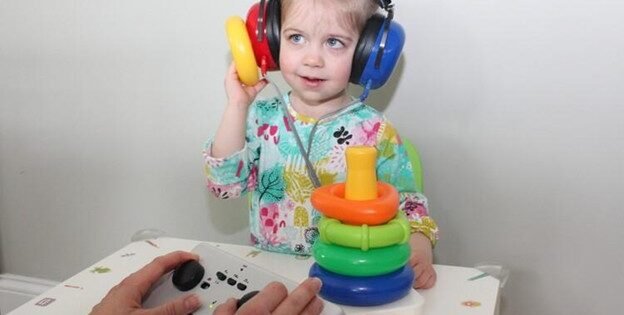
Helping your child prepare for an ear appointment
Use simple, neutral language: “We are going to ask someone to check how your ears are doing.” Avoid promising that nothing will feel unusual, or saying that a procedure will definitely happen. Ask the clinic what the planned visit involves so that your explanation matches the appointment.
Tell the team if your child is nervous about touch near the head, unfamiliar sounds, or medical settings. Ask whether they can explain each step before starting, allow time for questions, or agree on a way for your child to ask for a pause. These are requests to discuss, not promises about a particular service.
When booking child earwax removal in Halifax, check the age range the provider sees and whether the first visit is an assessment, treatment, or both. Bring any instructions you have received from another clinician. If your child becomes unwell before the visit, contact the clinic to ask whether the appointment remains appropriate.

Assessing earwax in early childhood: examination and follow-up
Ask the clinician to explain the finding in everyday language. Is there wax present without a blockage, or is it preventing a clear view or contributing to symptoms? What can be assessed today, and what remains uncertain? A clear explanation is more useful than leaving with only the word “wax.”
If treatment is recommended, ask why that approach suits your child, what alternatives exist, and what would happen if your child cannot tolerate it. Do not assume that a method used for an adult, a sibling, or a previous visit will be the right choice this time.
Before leaving a pediatric hearing check in Halifax, ask who to contact with questions and whether another appointment is needed. If hearing has not been fully assessed, clarify the next step. A successful wax-removal appointment and a complete explanation of a listening concern are not necessarily the same outcome.
Talking with childcare staff and teachers
Share a short description of the concern and ask for concrete classroom examples. Useful questions include whether your child misses group instructions, does better face to face, or asks for repetition during noisy activities. Invite staff to describe changes without deciding that the child has a specific disorder.
You could write: “We are arranging an ear and hearing check because we have noticed some listening difficulties. Could you note when instructions seem hard to follow and when communication goes well? Please share a few examples we can discuss at the appointment.” Adapt this message to your child’s situation.
After the visit, share only information that is useful for supporting your child. If the clinician recommends further assessment, explain the practical next step rather than offering a diagnosis that has not been made. Concerns about earwax in early childhood can be one part of a wider conversation about communication.
Making a clear plan after the appointment
Write down the clinician’s recommendations while they are fresh. Include whether any product was recommended, the instructions you were given, and when to seek further advice. If you are unsure about an instruction, ask for clarification before trying it. Do not adapt an adult’s treatment routine for your child.
Choose one or two everyday situations to discuss at follow-up, such as story time or classroom instructions. Note whether the original concern improved, stayed the same, or changed. If difficulties persist, contact the clinician rather than assuming more cleaning is needed. Keep any hearing results with your child’s other health records.
The goal of care for earwax in early childhood is comfortable ears and a clear understanding of your child’s needs. When arranging child earwax removal in Halifax, ask about follow-up as well as the procedure itself. For continuing listening concerns, a pediatric hearing check in Halifax can help establish the appropriate next steps.
Questions to confirm when booking
Ask whether a referral is required, what the appointment costs, and whether any documents are needed for insurance reimbursement. Confirm the address, arrival time, and expected visit length. If you need an interpreter or other communication support, raise this when booking so the team can explain what is available. Keep the booking details with your observation notes.
Final thought
Sometimes, something as simple as earwax can quietly affect how a child hears the world.
Early identification and management can make a meaningful difference in listening, learning, and confidence.
Ready to take the next step?
Book Appointment
#22, 2625 Joseph Howe Drive, Halifax, NS
Phone: 902-444-7788