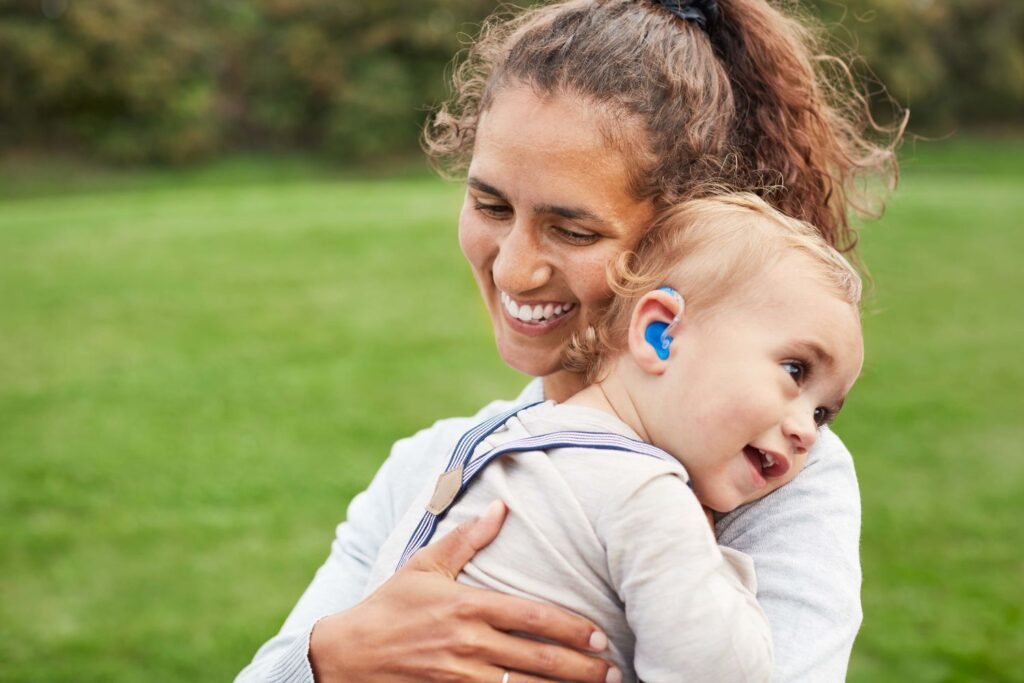

Childhood ear infections can make hearing and everyday communication more difficult, especially when fluid remains behind the eardrum. Most children recover without lasting problems, but ongoing listening, speech or learning concerns deserve attention. This guide explains 12 essential topics to help parents understand the signs, prepare for assessment and support their child.
Understanding Childhood Ear Infections
Childhood ear infections usually involve the middle ear, the small space behind the eardrum. A cold can precede an episode, but symptoms alone do not confirm the diagnosis. A clinician needs to examine the ear and consider the child’s history.
Two terms often appear in appointment notes: acute otitis media, an active middle-ear infection, and otitis media with effusion, fluid without an active infection. The second condition is often called glue ear. Understanding which problem is present helps families follow the right treatment and review plan.
The NIDCD guide to ear infections in children explains the causes, examination and treatment of middle-ear infections. Ask your child’s clinician which diagnosis applies, whether one or both ears are affected, and what changes should prompt another visit.
Why Childhood Ear Infections Can Affect Hearing
Fluid behind the eardrum can reduce the movement that normally carries sound through the middle ear. This can cause conductive hearing loss: sounds may seem quieter or muffled even when a child still notices louder sounds. Hearing can change as the amount of fluid changes.
The relationship between ear infections and hearing loss is therefore not always obvious at home. Hearing the television does not necessarily mean that a child catches quiet speech across a busy room. A hearing assessment helps establish what the child can hear in each ear.
According to ASHA’s ear infection information sheet, fluid-related hearing loss may resolve when the middle ear clears. Repeated disease can sometimes damage middle-ear structures, so persistent concerns deserve follow-up rather than an assumption that hearing has returned to normal.
Signs of Childhood Ear Infections
Childhood ear infections may cause pain, fever, irritability or disturbed sleep. Hearing difficulties can also be present when a child no longer complains of pain. Watch for a change from your child’s usual listening behaviour.
- Asking for repetition or saying “what?” more often.
- Turning up television or music volume.
- Speaking more loudly than usual.
- Missing instructions, particularly with background noise.
- Appearing tired, distracted or frustrated during conversation.
- Changes in balance or complaints that sounds seem muffled.
These observations are reasons to seek advice, not a diagnosis. For example, write down whether your child missed a direction during a noisy family meal or during quiet one-to-one conversation. Specific examples are more useful at an appointment than a broad label such as “doesn’t listen.”
Possible Effects on Speech, Language and Learning
Children learn language through repeated access to speech. When hearing fluctuates, some spoken information may be harder to access. The concern about ear infections and speech delay is especially relevant when listening difficulties persist during a period of rapid language development.
Speech and language
Parents may notice unclear speech, limited progress with new words or difficulty following spoken directions. These concerns deserve assessment in their own right. A hearing test and, when appropriate, speech-language evaluation can help identify the support a child needs.
Classroom listening
A classroom combines distance, competing voices and changing instructions. A child who manages well at home may still struggle during group work. Share hearing concerns with the teacher and ask for examples of situations in which communication is difficult.
Behaviour and confidence
Repeated misunderstandings can be frustrating. Before treating an apparent lack of attention as deliberate behaviour, check that the child heard the message. Childhood ear infections do not mean that lasting learning problems are inevitable; the aim is to identify current difficulties and respond to them.
The NHS overview of glue ear describes how persistent fluid can affect speech development and school progress. An individual assessment is more useful than predicting a child’s future from their infection history alone.

When Childhood Ear Infections Need Medical Care
Arrange medical advice for suspected childhood ear infections, especially when symptoms worsen, discharge comes from the ear, hearing changes, or symptoms last more than two to three days. The CDC’s ear infection guidance also recommends care for a fever of 39°C or higher.
A baby younger than three months with a temperature of 38°C or higher needs medical advice right away. Seek prompt care for any severe or concerning symptom. A hearing appointment does not replace medical assessment of an acutely unwell child.
Ask the treating clinician what to do if your child is not improving, how to manage discomfort safely, and when the ears should be checked again. Keep the follow-up instructions somewhere that all caregivers can find them.
When to Arrange a Hearing Assessment
Do not wait for a particular number of childhood ear infections if you already have concerns about hearing, speech or development. Discuss those concerns with your child’s physician and audiologist.
For middle-ear fluid, the AAO-HNSF clinical guideline recommends an age-appropriate hearing test when fluid persists for three months or longer, or for fluid of any duration in a child at increased developmental risk. This is a follow-up threshold for fluid, not an instruction to wait three months with acute pain or a new hearing concern.
Before leaving an appointment, clarify who will arrange the test and who will review the result. If a referral is pending, ask what support is appropriate in the meantime and whom to contact if listening becomes more difficult.
How Audiologists Assess Hearing and Middle-Ear Function
An assessment after childhood ear infections considers both hearing and middle-ear function. The combination of tests depends on the child’s age, development and ability to participate.
Ear examination and tympanometry
The audiologist examines the ears and may use tympanometry to assess eardrum movement and middle-ear function. Tympanometry provides information about the middle ear; it does not, by itself, measure everything a child can hear.
Age-appropriate hearing tests
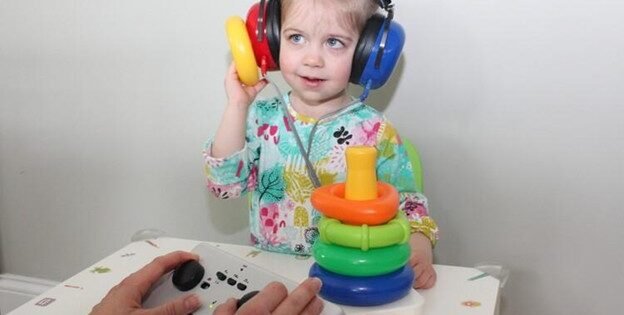
Young children may respond to sounds through play-based tasks. The audiologist explains what the results show and whether more testing is needed. Learn about hearing assessments at Novasound, and contact the clinic to discuss the most suitable appointment for your child.
A clear follow-up plan
Ask for a plain-language explanation: Is hearing reduced? Does the result differ between ears? Was the assessment complete? When should testing be repeated? These questions help turn a test result into practical next steps for home, school and the medical team.
Treatment and Follow-Up for Childhood Ear Infections
Treatment depends on whether there is an active infection, persistent fluid or another ear problem. Some infections improve without antibiotics; others need prescribed treatment. A clinician may recommend a short observation period for selected mild infections. Follow the specific instructions given for your child.
Persistent fluid needs its own management plan. An ENT specialist may discuss ventilation tubes, and hearing support may be appropriate in some cases. Decisions should consider the examination, hearing results and impact on everyday life.
A useful appointment question is: “What outcome are we checking at the next visit?” Pain relief, clearance of fluid and hearing recovery are different things. Ask which has been assessed and which still needs review. Bring any previous hearing results so the team can compare them.
Practical Support at Home and School
While childhood ear infections or fluid affect listening, simple communication changes can help. The National Deaf Children’s Society’s glue ear guide recommends gaining the child’s attention, facing them, limiting background noise and speaking clearly without shouting.
For example, turn off the television before explaining tomorrow’s plans. Move closer before speaking instead of calling from another room. If a message is missed, repeat it calmly and check which part needs clarification.
At school, share the hearing report and ask the teacher which arrangements fit the child’s needs. You might discuss a position closer to the speaker, written reminders for important instructions, or a quiet place for a conversation. Agree how the family and school will share observations before the next review.
Make the child part of the conversation. Ask, “Where is it hardest to hear?” Their answer may identify a particular lesson, room or activity. Keep the focus on making communication easier and helping the child feel comfortable asking for repetition.
Preparing for Your Child’s Appointment
A short, organised history helps make an appointment about childhood ear infections more productive. Bring information you already have; you do not need to reconstruct every detail perfectly.
- Approximate dates of infections and which ear was affected, if known.
- Previous medical notes, hearing results and treatment information.
- When you first noticed changes in listening or speech.
- Examples from home, childcare or school.
- Your main questions and any communication needs for the visit.
Describe observations separately from assumptions. “She asked for the same sentence three times at dinner” is an observation. “Her hearing is permanently damaged” is a conclusion that testing may not support. This distinction keeps the discussion focused on what can be checked.
Before the visit, explain to your child that the team will check their ears and listening. Ask the clinic how to prepare for the specific tests. Afterward, keep a copy of the results and note the next appointment or referral so that the plan is easy to follow.
Questions to bring to the consultation
Choose the questions that match your main concern about childhood ear infections. You do not need to ask everything at once; a short priority list can help you use the appointment well.
- About the examination: Is there an infection today, fluid without infection, or another explanation for the symptoms? Can you explain the difference in everyday language?
- About hearing: What did the hearing assessment establish for each ear? Were all planned tests completed, or will another visit be needed to answer the remaining questions?
- About daily life: Which of the difficulties we described could relate to the hearing findings? Are there other professionals we should involve if speech or learning concerns continue?
- About options: What are the reasons for the recommended approach? What benefits, limitations and follow-up requirements should we understand before deciding?
- About responsibility: Who will send the referral or results? Should we book the review ourselves, or will the service contact us? Who can answer questions between appointments?
If a term is unfamiliar, ask the clinician to write it down. If the explanation is difficult to follow, try repeating your understanding in your own words: “So the next step is a hearing review, and we should call sooner if these symptoms appear?” This gives the team an opportunity to correct any misunderstanding.
Turn the recommendations into a simple family plan
After the appointment, make a brief note of the agreed actions. A practical plan might record the next test, the person arranging it, the review date and the contact number for questions. Keep medical instructions exactly as provided rather than relying on a summary from memory.
For school or childcare, share the information that is relevant to communication. For example: “We are following up a hearing concern. Please let us know if instructions are frequently missed and tell us which activities are difficult.” This asks for useful observations without asking a teacher to diagnose an ear condition.
Pick one or two everyday situations to discuss at the next review. You might note whether conversation during dinner is easier when the television is off, or whether the child still asks for repetition during quiet reading. These notes describe participation; they are not a home hearing test and cannot establish whether middle-ear fluid has cleared.
Give your child an age-appropriate way to contribute. A younger child might point to a picture of the activity that felt difficult. An older child might describe where they could hear the teacher most comfortably. Ask open questions and accept “I don’t know” as a useful answer.
When several caregivers are involved, agree where the plan will be kept and who will update it. This can prevent missed appointments or conflicting messages. At the next visit, bring the plan and ask what has changed, which actions are complete and what remains to be checked after childhood ear infections.
Frequently Asked Questions About Childhood Ear Infections
Does every ear infection cause permanent hearing loss?
No. Fluid-related hearing changes are often temporary. Persistent or recurrent disease still needs review, particularly if you notice ongoing listening or speech concerns.
Can fluid remain after the pain goes away?
Yes. Symptoms of an acute infection and the presence of middle-ear fluid do not always resolve together. Ask whether another ear examination or hearing test is needed.
Should we wait until school notices a problem?
No. Raise your concerns when you notice them. Bring examples from everyday life, even if a teacher has not reported a difficulty.
Do childhood ear infections prove that a child has APD?
No. Infection history alone is not a diagnosis of auditory processing disorder. Start by discussing current hearing and middle-ear status with an audiologist. For related information, read our guide to auditory processing disorder and learning challenges in children.
Hearing Support for Families in Halifax
Most childhood ear infections resolve without lasting problems. If listening, speech or classroom participation remains a concern, the next step is an assessment and a clear plan, rather than guessing from symptoms alone.
Novasound Hearing & Balance Center provides pediatric hearing evaluations in Halifax. Contact our team to discuss your child’s age, recent ear history and current concerns, and to confirm the appropriate appointment.
Book an appointment at Novasound Phone: 902-444-7788 Address: #22, 2625 Joseph Howe Drive, Halifax, NS.
This article provides general education. Your child’s clinician can recommend care based on their examination and individual needs.