Hyperacusis vs Misophonia: 7 Essential Tips for Better Care
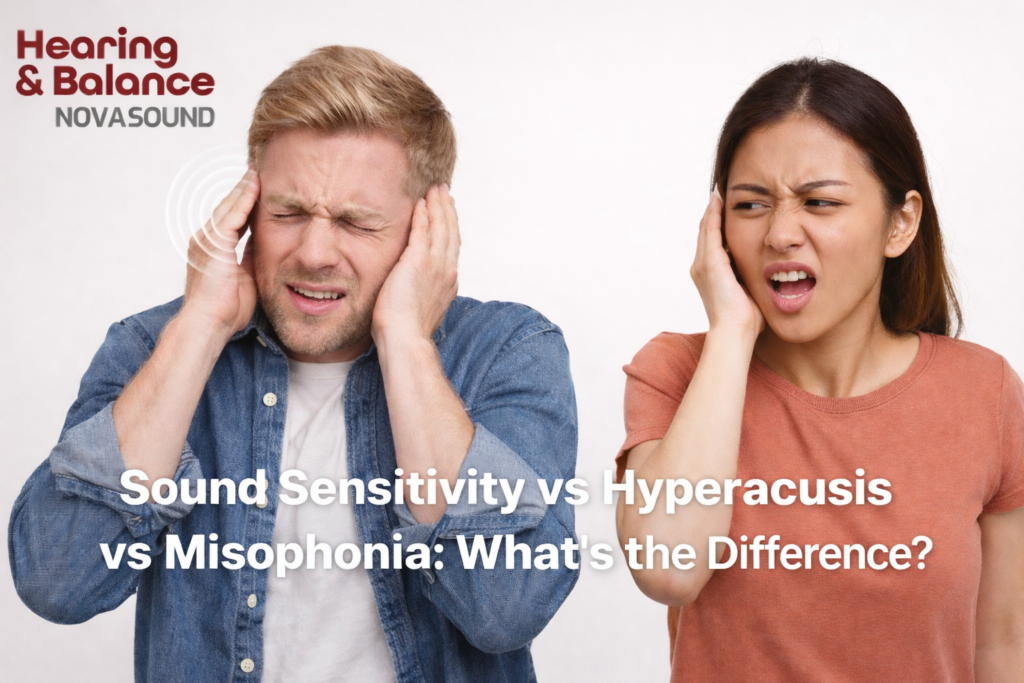
Understanding hyperacusis vs misophonia starts with a simple question: what is difficult about the sound? Some people experience everyday noise as unusually loud or painful. Others have an intense reaction to particular sounds, even when those sounds are quiet. “Sound sensitivity” is a useful description of the problem, but it is not one diagnosis with one treatment.
This guide compares the terms and offers seven practical ways to prepare for assessment and discuss care. The aim is to help you explain your experience clearly, whether you are seeking support for yourself or a family member. The examples are conversation starters, not a checklist that can diagnose a condition or establish its cause.
1. Understand sound sensitivity as an umbrella term
People use sound sensitivity to describe many experiences: uncomfortable loudness, pain, fear, anger, overload or difficulty managing competing sounds. The phrase does not establish whether the problem is temporary, whether hearing has changed or which treatment will help. Tell a clinician what you mean rather than assuming that the term explains everything.
What is hyperacusis?
Hyperacusis involves heightened sensitivity to ordinary environmental sounds. It can include loudness discomfort, annoyance, fear or pain, and its impact varies. Emotional reactions do not rule it out. The ASHA clinical resource on tinnitus and hyperacusis describes these categories and the importance of individual assessment.
What is misophonia?
Misophonia involves reduced tolerance of specific sounds or associated stimuli, with strong emotional, physical or behavioural reactions. A particular pattern or meaning is often more important than volume alone. The 2022 consensus definition of misophonia was developed through expert agreement; it is a useful shared definition rather than a test you can perform on yourself.
When comparing hyperacusis vs misophonia, avoid treating one as a real physical problem and the other as a personal failing. Distress deserves attention in either case. A person who struggles at a family meal or in an office needs a respectful discussion of the difficulty, not a demand to prove that a sound should be upsetting.
Another term you may hear is phonophobia, meaning fear of sound. If fear is central to your experience, describe it explicitly. You do not have to choose the correct technical label before contacting a professional. Clear examples of what happens are more useful than trying to fit every experience into a single category.
2. Compare hyperacusis vs misophonia by describing the pattern
A helpful distinction is whether everyday sound levels feel uncomfortable across different settings, or whether particular trigger sounds provoke a strong reaction. For example, someone might describe dishes and traffic as painfully loud. Another person might describe an immediate, intense reaction to repetitive chewing at a low volume. These are illustrative patterns, not diagnostic rules.
| Term | What someone may describe | What the description cannot establish |
|---|---|---|
| Sound sensitivity | A broad difficulty tolerating or managing sound. | The cause, expected duration or best treatment. |
| Hyperacusis | Ordinary environmental sounds feel excessively intense or uncomfortable, sometimes painful. | A single mechanism or the absence of other hearing problems. |
| Misophonia | Specific triggers evoke a strong response that is not explained by volume alone. | That the person is choosing the response or can simply ignore it. |
Try separating the sound from the response when explaining sound sensitivity. “A person tapping a pen” identifies the stimulus. “I feel tense, angry and unable to continue reading” identifies the impact. Include whether the same sound bothers you in other settings, whether the reaction changes with context and what you do afterward.
Use examples without repeatedly testing yourself
You do not need to replay a distressing recording to produce a perfect account. Think of two or three ordinary situations that have already happened. Write down what you remember, including uncertainty. A note such as “I am not sure whether the volume or repetition matters more” can help a clinician ask the next question.
For a discussion of hyperacusis vs misophonia, it can be useful to mention sounds that remain comfortable as well as difficult ones. This keeps the description specific. If no clear pattern is apparent, say so. Variability is information to discuss, not evidence that your experience is unimportant or that you have described it incorrectly.
3. Describe overlapping symptoms instead of forcing one label
The comparison of hyperacusis vs misophonia is not always an either-or choice. Someone may report several types of sound-related difficulty. A clinician needs the full account, including pain, loudness discomfort, fear, trigger reactions and listening problems. Do not omit a symptom because it seems inconsistent with the label you first read online.
Distinguish an external sound that is difficult to tolerate from a ringing or buzzing sensation. If tinnitus is also present, tell the professional about both experiences. Likewise, difficulty understanding speech in background noise is worth mentioning separately. An appointment can address related concerns without assuming they all have the same explanation.
If your sound sensitivity followed a head injury, tell your healthcare provider when the injury occurred and when the listening changes began. Our article on hyperacusis after concussion offers questions for discussing assessment and support. Do not use a comparison article to decide that a new symptom after an injury needs no medical review.
A brief sound sensitivity history helps focus the visit
Prepare a simple timeline: what listening was like before the problem, when you first noticed a change and what has happened since. Include any relevant medical visits or earlier test results. If the symptoms have been present for years, describe what prompted you to seek help now, such as a new job, a change at school or increasing difficulty with meals.
For example, you might write: “I have disliked chewing sounds for several years. More recently, several household sounds have also become uncomfortable.” That account leaves room to explore more than one issue. It is more informative than replacing the whole history with a diagnosis you have not discussed with a clinician.
Tell the clinician what sound sensitivity prevents or interrupts. The practical impact may be leaving a meeting early, avoiding shared meals or finding a classroom difficult. These details help set priorities for care and provide a basis for reviewing whether the agreed plan is useful.
4. Prepare for an assessment of sound sensitivity
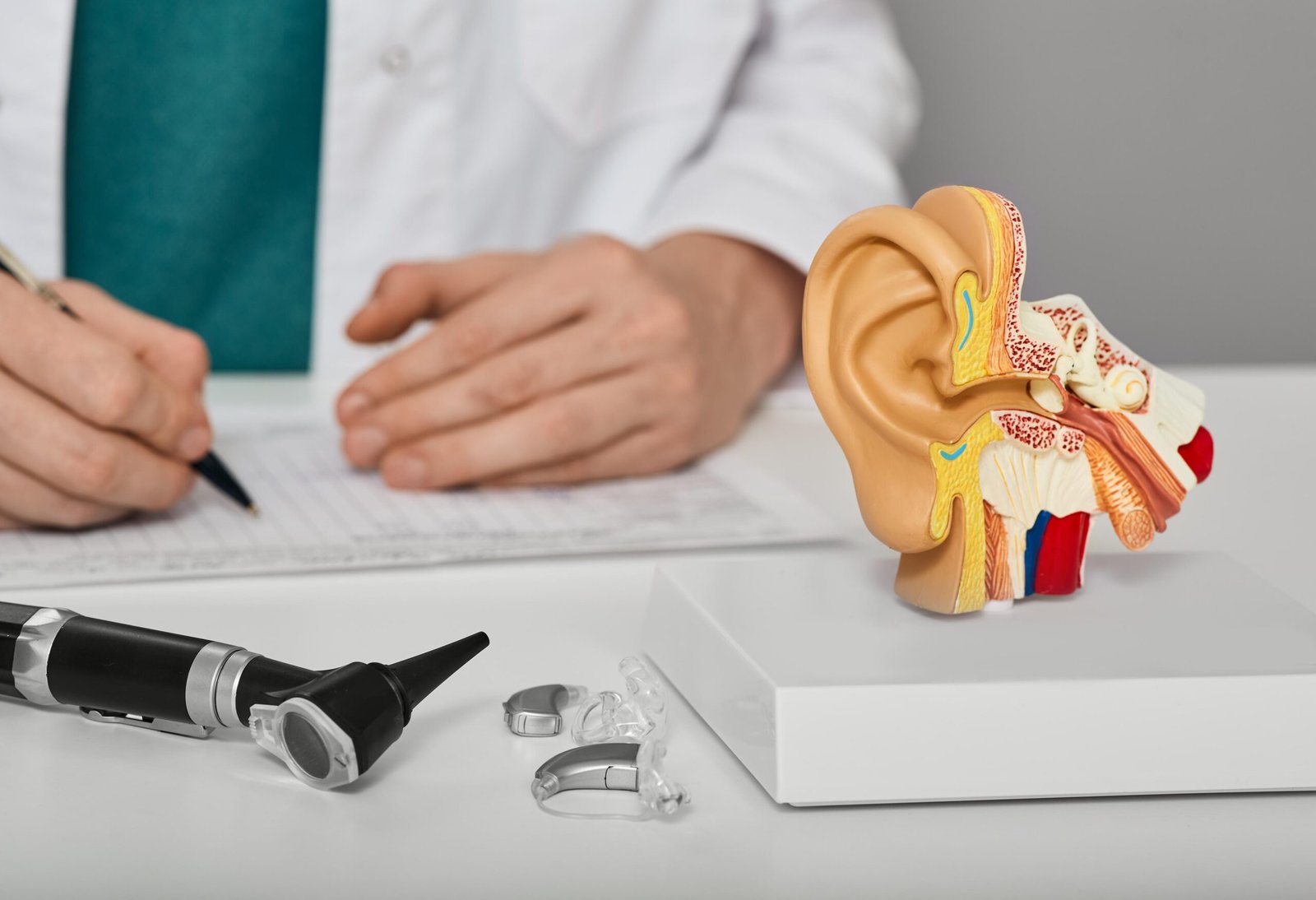
When booking, explain the main problem and ask which appointment is appropriate. An audiologist can discuss hearing-related assessment and whether referral to another professional is indicated. Bring previous results and information about any medical care already underway. For your sound sensitivity assessment, ask who will receive the findings and how follow-up will be arranged.
Assessment may include an audiological history, hearing tests and questionnaires. Loudness discomfort levels, also called uncomfortable loudness levels, may be considered in suitable cases. ASHA notes that these measurements can fluctuate and may be difficult for some people to complete. A result should be interpreted with its limitations and the wider history; it is not a standalone answer to hyperacusis vs misophonia.
Explain your comfort needs before testing
Tell the clinician if you experience pain or are worried about sound during assessment. Ask what the proposed test measures, what you will be asked to do and how to signal that you need a pause. You should understand the process before starting. Do not assume that you must endure a painful sound to make the results valid.
Our conventional hearing tests page introduces a related service at Novasound. If earlier results were described as normal, bring the report rather than relying only on memory. Ask which aspects of hearing were measured and how those findings relate to the situations you find difficult.
Bring three questions you want answered
- What does the assessment tell us, and what remains uncertain?
- Does the explanation fit the examples I described?
- What is the next step, and who is responsible for arranging it?
If sound sensitivity makes a visit difficult, ask whether a support person can attend with your agreement. Request a written summary of recommendations, especially if the appointment covers several topics. Understanding the plan is more useful than leaving with a technical term that has not been explained.
5. Discuss individualized treatment for hyperacusis vs misophonia
Understanding hyperacusis vs misophonia helps guide an appropriate care discussion rather than assigning everyone the same exercise. Ask what each proposed intervention is intended to change and why it fits your assessment. A plan should take account of pain, distress, other symptoms, personal goals and any care you already receive.
The NHS hyperacusis guidance describes sound therapy and cognitive behavioural therapy as possible options. It advises stopping sound therapy and contacting a doctor if the sound is uncomfortably loud or painful. This is not an instruction to begin an internet listening program or increase volume through discomfort.
For misophonia, a randomized clinical trial of cognitive behavioural therapy found benefit from a structured group intervention in adults. That result supports discussing appropriate psychological care; it does not guarantee that every person will respond or that any activity called exposure therapy is equivalent to the studied treatment.
Clarify the plan before practising at home
Ask for the purpose, instructions and stopping rules for any home activity. Explain practical limits such as time, equipment, shared living space or competing appointments. If the instructions are not clear, contact the treating professional before improvising. A plan that you understand can be reviewed more meaningfully than an activity copied from another person’s experience.
In a discussion of hyperacusis vs misophonia, ask what the clinician expects to improve first. It might be a particular activity, distress or confidence in managing a situation. Request a review date and ask what will happen if there is limited benefit. A fixed number of sessions should not be presented as a universal recovery deadline.
Ask about hearing protection in context
Continue appropriate protection for hazardous noise. For ordinary listening situations, discuss when temporary noise reduction is useful and when continual protection may be unhelpful. NHS guidance discourages wearing earplugs or earmuffs all the time. People with pain or setbacks need an individual plan rather than a blanket instruction to tolerate every sound.

6. Plan practical support at home, work or school
Start with one situation you want help managing. For a family meal, the concern might be a particular trigger, several competing sounds or difficulty leaving the table discreetly. For a workplace meeting, it might be a speakerphone, background music or a long session without a break. Be specific about the barrier and the adjustment you want to discuss.
Possible requests include a quieter meeting room, written instructions, reduced competing audio or an agreed break option. These are examples of accommodations to negotiate, not a treatment prescription. Ask the relevant people what is feasible. A clinician can advise whether documentation or a more formal workplace or school plan would help.
Describe a need without assigning blame
Try saying, “That sound is difficult for me to manage. Could we discuss an arrangement that lets me stay involved?” This gives the other person a practical starting point. An explanation of sound sensitivity does not need to include every medical detail, and you can choose whom to involve in the conversation.
If you are supporting someone with sound sensitivity, ask what kind of help they want. Do not surprise them with trigger sounds to test their reaction, or insist that another person’s tolerance should determine their own. Agree on a simple signal for a break and a suitable time to discuss arrangements when everyone can take part calmly.
For parents seeking help with sound sensitivity, describe the child’s own words and the settings where difficulties occur. Ask the school and healthcare team about age-appropriate assessment. An adult treatment study does not automatically establish what is suitable for a child. Where possible, include the young person in decisions about practical support and what information is shared.
The purpose of comparing hyperacusis vs misophonia is to make support more precise. A request should reflect the person’s actual difficulty rather than a stereotype about the condition. Review agreed arrangements together so they remain practical for the household, classroom or workplace.
7. Review progress and decide what happens next
When reviewing sound sensitivity care, choose a goal that matters to you, such as participating in a meeting with agreed support or discussing a shared meal more confidently. Describe what success would look like in that setting. Avoid making the only goal “tolerate louder sounds,” particularly if that does not address the difficulty that brought you to care.
A short follow-up note can record the activity, setting, support used and what happened. You do not need a constant log of every sound. A few comparable examples help you explain whether the plan is useful and whether symptoms have changed. Record difficulties honestly; the purpose is to inform care rather than demonstrate perfect compliance.
At a review, ask whether the current explanation still fits. If a new symptom appears, describe it separately rather than assuming it belongs to the original problem. If recommendations from different professionals seem inconsistent, request clarification of their purposes and limits. Keep an updated summary of the agreed next steps.
How Novasound can help
Novasound Hearing & Balance Center describes services including sound-tolerance questionnaires, loudness discomfort assessment where appropriate, post-concussion auditory assessment, education and individualized sound therapy. Ask the clinic which services fit your concern, who provides them and whether another referral is recommended. Confirm current availability, fees and appointment details directly.
For related information, visit our hyperacusis care page. You can arrange an appointment to discuss sound sensitivity without first deciding which label applies. Bring the situations you want help with and the questions that matter most to you.
When to seek urgent help
Do not wait several weeks if hearing suddenly drops in one or both ears. The NIDCD guidance on sudden deafness treats sudden hearing loss as a medical emergency. Seek immediate medical assessment rather than assuming the change is caused by stress, earwax or sound sensitivity.
For ongoing symptoms that interfere with daily life, arrange a professional review without feeling that you must first meet a fixed duration threshold. Explain pain, changes after a head injury or worsening symptoms when booking so the service can advise on the appropriate route.
Frequently asked questions about hyperacusis vs misophonia
Is sound sensitivity a separate diagnosis?
It is commonly used as a broad description. Explain what sound feels like, which settings are difficult and what reaction you notice. The description alone does not establish a cause or treatment.
Does anger at a sound prove misophonia?
No. A single reaction is not enough to diagnose yourself. Describe the pattern and impact to a qualified professional rather than treating one emotion as a definitive test.
Can these experiences overlap?
Yes. Report loudness discomfort, pain, trigger reactions and hearing concerns separately. A useful assessment considers your full experience rather than requiring you to select one label before attending.
Should I practise through painful sound?
Do not force painful exposure. Stop the activity and seek advice from the treating professional. Ask for clear stopping rules before beginning any home listening program.
How can I prepare for a first visit?
Bring a brief timeline, two or three everyday examples, previous hearing results and your main questions. Tell the clinic about your comfort needs when arranging the appointment.
Book Appointment
Ready to take the next step?
Novasound Hearing & Balance Center
#22, 2625 Joseph Howe Drive, Halifax, NS
Phone: 902-444-7788