
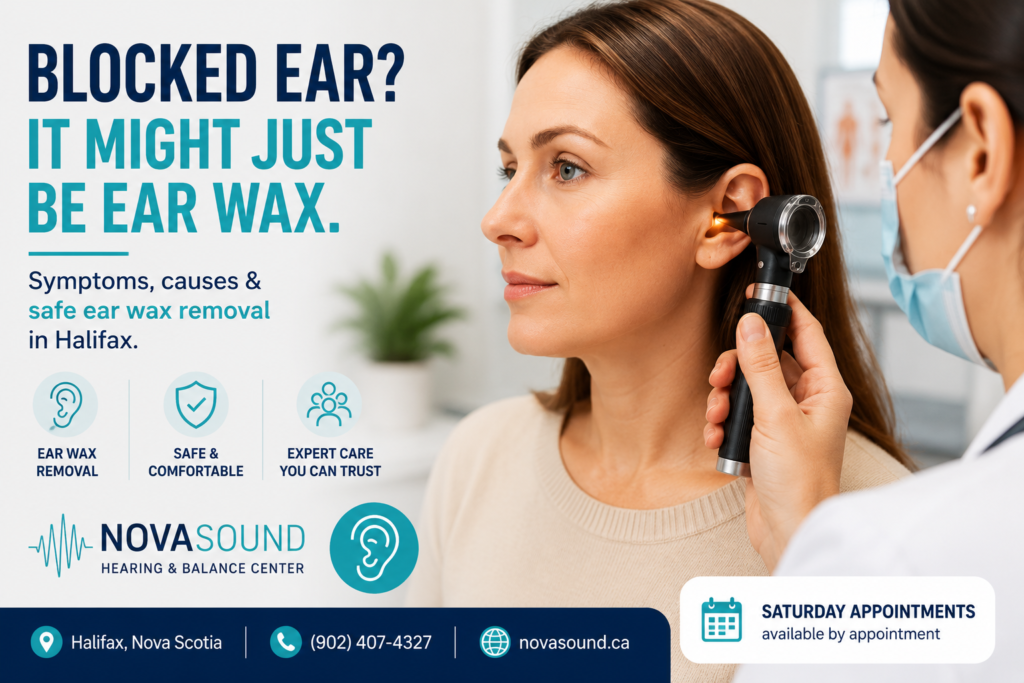
A blocked ear can be frustrating and sometimes alarming. One of the most common—and treatable—causes is ear wax buildup.
Professional ear wax removal in Halifax is one of the most common services at Novasound Hearing and Balance Center.
Have you ever woken up with one ear feeling blocked or noticed that sounds suddenly seem muffled? While it’s natural to worry about an ear infection or permanent hearing loss, one of the most common causes is much simpler—a build-up of ear wax (cerumen).
At Novasound Hearing and Balance Center in Halifax, we regularly see patients who are surprised to learn that excessive ear wax is contributing to their hearing difficulty. The good news is that, in many cases, it can be safely removed after a professional examination.
Key Takeaway
Sudden hearing loss needs urgent medical attention. If a blocked ear comes with a sudden drop in hearing, seek medical care immediately rather than assuming it is wax or waiting for a routine cleaning appointment. The NIDCD guidance on sudden deafness explains why prompt assessment matters.A blocked ear may be caused by excess ear wax, but an examination is needed to confirm the cause. Professional removal may improve hearing when wax is responsible. Avoid cotton swabs, which can push wax deeper.
Warning Signs of Ear Wax Buildup
Excessive ear wax can cause a variety of symptoms, including:
- A blocked or plugged sensation
- Muffled hearing
- Sudden or gradual hearing loss
- Ear fullness or pressure
- Ringing in the ears (tinnitus)
- Itching
- Hearing aid feedback (whistling)
- Difficulty understanding conversations
These symptoms can also be caused by other ear conditions, which is why a proper examination is important before attempting treatment.
Why Does Ear Wax Build Up?
Ear wax is not dirty—it plays an important role in protecting your ears by trapping dust, debris, and bacteria while helping keep the ear canal healthy.
Some people naturally produce more ear wax than others, and build-up is more likely if you:
- Wear hearing aids
- Frequently use earbuds or earplugs
- Have narrow ear canals
- Are older
- Have dry skin or eczema affecting the ears
- Use cotton swabs regularly
Normal wax versus an impacted blocked ear
Seeing wax near the entrance of the ear does not automatically mean there is a blockage. Wax forms in the outer part of the canal. The canal’s skin gradually carries it outward, helped by ordinary jaw movement. This is why trying to remove every trace of wax can interfere with a normal protective process.Clinicians use the term cerumen impaction when accumulated wax causes symptoms or prevents a necessary examination. The important question is not simply whether wax is present, but whether it is causing a problem. A blocked ear assessment therefore considers both what you feel and what the clinician can see.The ENT Health overview of cerumen impaction explains this distinction. It also describes why treatment choices depend on the individual ear. Tell your provider about diabetes, immune-system problems, ear-canal skin conditions, tubes, or previous eardrum damage before any removal procedure.Why Cotton Swabs Can Make a Blocked Ear Worse
Many people try to clean their ears with cotton swabs, but this often pushes wax deeper into the ear canal instead of removing it.
This can lead to:
- Impacted ear wax
- Increased hearing difficulty
- Ear discomfort
- Difficulty examining the eardrum
In most cases, the ear is self-cleaning and does not require routine cleaning with cotton swabs.
Can Ear Wax Affect Hearing Aids?
Yes.
Even a small amount of wax can:
- Reduce sound quality
- Cause hearing aid feedback
- Block receivers or wax guards
- Make speech less clear
Regular ear examinations can help hearing aid users maintain optimal performance.
When Should You See an Audiologist for a Blocked Ear?
You should arrange an assessment if you notice:
- One ear suddenly feels blocked
- Hearing has become muffled
- Your hearing aids are no longer working as expected
- Persistent ear fullness
- Tinnitus that has recently developed or worsened
- You suspect excessive ear wax
Although ear wax is a common cause of these symptoms, similar complaints can also occur with ear infections, middle ear problems, or sudden sensorineural hearing loss. A professional assessment helps determine the correct cause.
Could a Blocked Ear Have Another Cause?
A blocked ear describes a sensation, not a diagnosis. Wax in the outer canal, inflammation of the canal, and fluid behind the eardrum are different problems that can produce overlapping complaints. Cleaning the canal cannot be assumed to treat a problem deeper in the ear.According to ENT Health’s earwax care guidance, pain, drainage, or bleeding warrant medical assessment. These are not reasons to push ahead with home cleaning. Previous ear surgery or a hole in the eardrum also changes which products and procedures may be safe; get advice before putting drops or water into the ear.When describing a blocked ear, separate the sensations: does it feel full, does sound seem quieter, or are words difficult to understand? Mention each concern rather than calling everything “wax.” This helps keep the appointment focused on finding the cause instead of assuming a treatment before your ears have been examined.
What If a Child Has a Blocked Ear?
A child may not be able to explain a blocked ear clearly. Parents might notice difficulty responding to quiet sounds, changes in listening, or complaints about discomfort. Avoid deciding that wax is responsible from behaviour alone. Share specific examples with the child’s healthcare professional, including when you first noticed the change.Middle-ear fluid is different from earwax: it sits behind the eardrum rather than in the outer canal. The NIDCD information on ear infections in children explains that fluid can remain after an infection and may affect hearing, sometimes without obvious symptoms. A clinician examines the eardrum and may use additional tests to assess the middle ear.If a young child has fever, ear drainage, balance changes, or seems unwell, describe those signs when seeking care. Do not try to reach into a child’s ear to investigate. For related reading, see our guide to earwax in early childhood. Ask the provider how the child’s hearing concerns will be followed up if wax is not the explanation.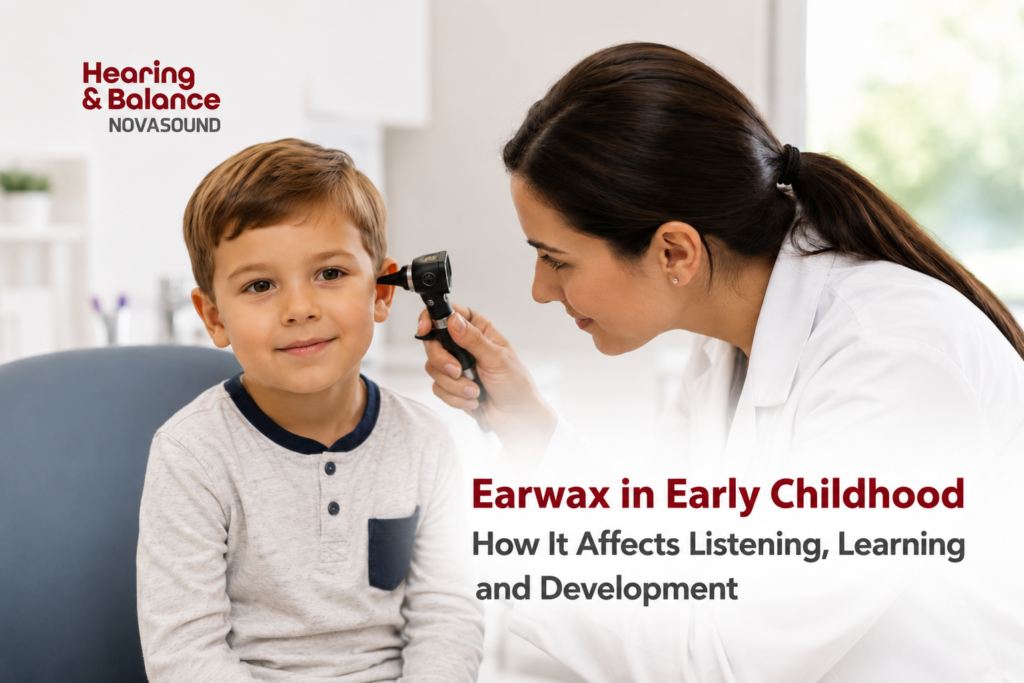
How Is Ear Wax Removed from a Blocked Ear?
At Novasound Hearing and Balance Center, every appointment begins with a careful examination of your ears.
If ear wax is causing your symptoms, removal may be performed using one or more appropriate techniques depending on your ear health and the nature of the blockage, including:
- Instrumentation (such as curettes or forceps)
- Irrigation (when appropriate)
Our goal is to remove ear wax safely while minimizing discomfort and protecting the ear canal and eardrum.

Can You Prevent Ear Wax Build-Up?
While some people naturally produce more ear wax than others, these tips may help reduce problems:
- Avoid inserting cotton swabs or other objects into your ears.
- Keep hearing aids clean and well maintained.
- Follow your audiologist’s advice if you’re prone to recurrent wax build-up.
- Seek professional care if your ears frequently become blocked.
How often should a blocked ear be checked?
There is no single cleaning schedule that suits everyone. The ENT Health earwax prevention FAQs explain that most people do not need regular wax removal. People who repeatedly develop impaction, including some older adults and hearing aid users, may benefit from an individual plan.That plan should make clear what prompts a review and whether any preventive care is appropriate. Having needed removal once does not mean you must book the same procedure every month or every year. Equally, repeatedly experiencing a blocked ear is a reason to discuss the pattern instead of relying on repeated home cleaning.Ask what improvement is expected from removal. If wax is obstructing sound, clearing it may improve hearing, but it cannot be expected to correct every type of hearing loss. During removal, tell the clinician if you experience pain rather than trying to tolerate it silently. Afterwards, make sure any remaining hearing concerns have a clear follow-up plan.Preparing for a Blocked Ear Appointment
A short symptom history can make your visit more useful. Before attending, write down when the blocked ear started, whether it affects one or both sides, and whether it feels constant or comes and goes. Describe any change in hearing in your own words: for example, conversations may sound quieter, speech may seem less clear, or your hearing aid may sound different.Tell the clinician about previous ear surgery, a known eardrum perforation, ear tubes, previous difficulties with wax removal, and any drops or other products you have already used. Mention pain, drainage, ringing, or dizziness rather than assuming that every symptom is caused by wax. These details help the clinician decide what to examine and which approach may be appropriate.If you wear hearing aids, bring them along and explain whether the problem occurs with the devices in, with them out, or both. This gives the appointment a clearer starting point. A device problem and an ear problem may need different attention, so avoid concluding that either one is responsible before the examination.Questions to ask at your visit
- Is there enough wax to explain my symptoms?
- Can you see the ear canal and eardrum clearly?
- Which removal method is appropriate for my ears, and why?
- What should I do if the blocked sensation remains?
- Do I need a hearing assessment or another medical review?
A simple symptom note to bring with you
You do not need medical terminology or a long diary. A few clear observations are enough to start a useful conversation. For example: “My left ear has felt blocked since Monday; voices sound quieter without my hearing aid, and the feeling is present all day.” Use your own experience rather than copying a symptom description that does not fit.- Timing: record the first day you noticed the change and whether it happened abruptly or gradually.
- Listening: give one everyday example, such as telephone calls, family conversations, or following speech at work.
- Previous care: list what you have tried and whether it changed anything, without repeating unsuccessful treatments.
- Your main question: write down what you most want clarified before leaving the appointment.
What If Your Ear Still Feels Blocked After Wax Removal?
Tell your clinician if your hearing or sense of fullness has not improved. Removing visible wax does not, by itself, establish that wax was the only cause of the problem. Explain what has changed and what remains, rather than repeatedly trying more cleaning at home.A useful follow-up discussion compares your symptoms before and after the procedure. Is speech clearer? Does one side still feel different? Has hearing aid feedback changed? Keep a brief note of these observations and ask what the next step should be. Depending on the examination, your clinician may advise further assessment.For recurring blocked ear symptoms, ask for an individual care plan. The aim is to respond to your own pattern of symptoms and examination findings. Before leaving, make sure you know whom to contact, when to arrange another review, and whether any specific ear-care instructions apply.For more information about hearing symptoms, explore our hearing loss information and tinnitus information. These resources can help you prepare questions for your appointment; they do not replace an ear examination.Blocked Ear: Frequently Asked Questions
Can I tell whether a blocked ear is caused by wax?
Symptoms alone cannot confirm the cause. A blocked ear, muffled hearing, and ringing may occur with more than one condition. An examination is needed before deciding that wax removal is the right treatment. Describe when the change began and how it affects you, and avoid using this symptom list as a self-diagnosis checklist.Should I wait for a routine appointment if hearing suddenly changes?
No. A sudden reduction in hearing needs immediate medical assessment, even when it feels like a blocked ear. Do not delay because you think you can see wax or because the ear does not feel painful. Tell the healthcare professional that the hearing change was sudden and explain when it started. See the NIDCD resource linked above for further information.What should I say when booking a blocked ear assessment in Halifax?
Explain that you would like an ear examination, describe the main symptom, and state how long it has been present. Mention whether you use hearing aids or have a history of ear surgery or eardrum problems. Ask what the appointment includes and whether you need any preparation. If symptoms suggest an urgent problem, seek medical care rather than waiting for a routine booking.Where can I learn more about recurring earwax problems?
Our guide to earwax removal provides related reading. At your appointment, ask which advice applies to your ears and what changes should prompt another assessment. Keep any personalised instructions so you can refer to them if symptoms return.Is ear wax normal?
Yes. Ear wax is a healthy, protective substance that helps keep the ear canal clean and reduces the risk of infection.
Can ear wax cause tinnitus?
In some cases, impacted ear wax may contribute to tinnitus. If tinnitus continues after wax removal, further assessment is recommended.
Are ear candles safe?
No. Ear candling has not been shown to remove ear wax effectively and may cause burns or other injuries.
Should I use ear drops before an appointment?
Softening drops may be helpful for some people, but they are not appropriate for everyone, particularly if you have ear pain, drainage, or a history of a perforated eardrum. If you’re unsure, ask your healthcare provider or audiologist before using them.
When to Book a Blocked Ear Assessment
If you’re experiencing a blocked ear, muffled hearing, or think excessive ear wax may be affecting your hearing, a professional examination is the safest way to identify the cause.
At Novasound Hearing and Balance Center, we provide comprehensive ear examinations and safe ear wax removal for children and adults, helping you get back to hearing comfortably and confidently.