
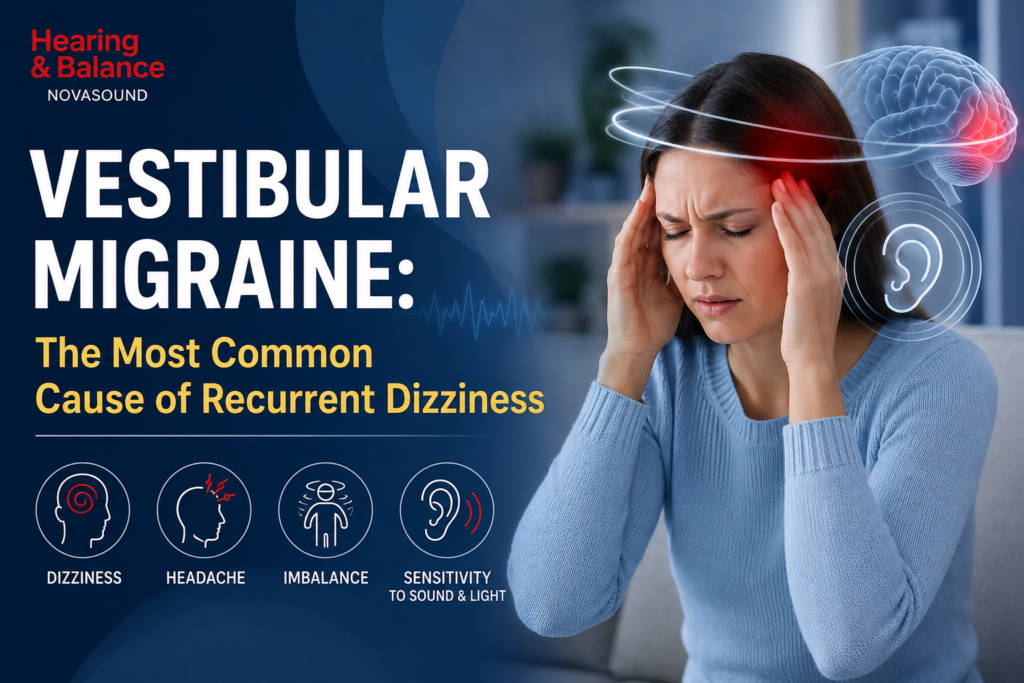
If you’ve experienced repeated episodes of dizziness, vertigo, or a sensation of being off balance, you may have wondered whether the problem is coming from your inner ear. While conditions such as benign paroxysmal positional vertigo (BPPV) and Ménière’s disease are well known, one of the most common causes of recurrent dizziness is actually vestibular migraine.
Many people with vestibular migraine never experience a severe headache during their dizzy episodes, making the condition difficult to recognize. As a result, some individuals spend months or even years searching for answers before receiving the correct diagnosis.
What Is Vestibular Migraine?
Vestibular migraine is a neurological condition in which migraine-related changes affect the brain’s balance pathways. Instead of causing only headaches, these changes can produce episodes of dizziness, vertigo, imbalance, motion sensitivity, or visual discomfort.
Vestibular migraine is one of the most common causes of episodic vertigo in adults and can affect people with or without a history of frequent migraine headaches.
Common Symptoms
Symptoms vary widely but may include:
- Spinning sensations (vertigo)
- Feeling off balance
- Rocking or swaying sensations
- Motion sickness
- Sensitivity to busy visual environments
- Light sensitivity
- Sound sensitivity
- Nausea
- Difficulty concentrating during episodes
- Ear fullness (without significant hearing loss)
- Temporary tinnitus in some people
Episodes can last anywhere from a few minutes to several hours, and sometimes even longer.
Does It Always Cause Headaches?
No.
This is one of the biggest misconceptions about vestibular migraine.
Some people experience dizziness without a headache, while others may notice:
- Headache before dizziness
- Headache after dizziness
- Mild headache only
- No headache at all
Because of this, vestibular migraine is often mistaken for an inner ear disorder.
What Can Trigger Vestibular Migraine?
Triggers vary from person to person but commonly include:
- Stress
- Poor sleep
- Hormonal changes
- Skipping meals
- Dehydration
- Bright lights
- Busy visual environments
- Certain foods or beverages
- Strong smells
Keeping a symptom diary can sometimes help identify individual triggers.
How Is Vestibular Migraine Diagnosed?
There is no single test that confirms vestibular migraine.
Diagnosis is based on:
- Your medical history
- Description of symptoms
- Migraine history
- Physical examination
- Hearing and vestibular assessment
- Excluding other causes of dizziness
Because several inner-ear conditions can produce similar symptoms, comprehensive testing may be recommended to help rule out other vestibular disorders.
How Is It Different from Other Causes of Dizziness?
Condition | Typical Features |
| Vestibular Migraine | Recurrent dizziness with migraine features, often normal hearing |
| BPPV | Brief spinning triggered by rolling in bed or looking up |
| Ménière’s Disease | Vertigo with fluctuating hearing loss, tinnitus, and ear fullness |
| Vestibular Neuritis | Sudden severe vertigo lasting days, usually following a viral illness |
| PPPD | Persistent dizziness and unsteadiness, often worse in visually busy environments |
Can It Be Treated?
Although vestibular migraine cannot usually be “cured,” many people experience significant improvement with appropriate management.
Treatment may include:
- Identifying and reducing triggers
- Regular sleep habits
- Adequate hydration
- Stress management
- Regular meals
- Physician-prescribed migraine medications when appropriate
- Vestibular rehabilitation therapy for persistent balance symptoms
Treatment plans vary depending on each person’s symptoms and overall health.
When Should You Seek Medical Attention?
You should seek prompt medical assessment if dizziness is accompanied by:
- Sudden hearing loss
- Double vision
- Difficulty speaking
- Weakness or numbness
- Difficulty walking
- Severe new headache
- Loss of consciousness
These symptoms may indicate a condition requiring urgent medical evaluation.
Frequently Asked Questions
Can vestibular migraine occur without a headache?
Yes. Many people experience dizziness with little or no headache.
Is vestibular migraine an inner-ear disease?
No. It is considered a neurological condition that affects the brain’s balance pathways, although its symptoms can closely resemble those of inner-ear disorders.
Can hearing loss occur with vestibular migraine?
Most people have normal hearing, although temporary ear fullness, tinnitus, or mild hearing changes may occur during some episodes.
Is vestibular migraine permanent?
Symptoms often fluctuate over time. Many people achieve good control through lifestyle changes, appropriate medical management, and, when needed, vestibular rehabilitation.
Can vestibular migraine occur without a headache?
Yes. Many people experience dizziness with little or no headache during vestibular migraine episodes.
How long does a vestibular migraine episode last?
Episodes can last from a few minutes to several hours. In some people, symptoms may persist longer or recur over several days.
Can vestibular migraine cause hearing loss?
Most people have normal hearing. Some may experience temporary ear fullness or tinnitus, but persistent hearing loss is uncommon and should be evaluated.
What triggers vestibular migraine?
Common triggers include stress, poor sleep, dehydration, skipped meals, hormonal changes, bright lights, busy visual environments, and certain foods. Triggers vary from person to person.
How is vestibular migraine treated?
Treatment may include lifestyle modifications, trigger management, medications prescribed by a physician, and vestibular rehabilitation when appropriate.
How Novasound Can Help
At Novasound Hearing & Balance Center, we provide comprehensive assessments for patients experiencing dizziness and balance disorders.
Depending on your symptoms, your evaluation may include:
- Comprehensive hearing assessment
- Vestibular testing
- Positional testing
- Video Head Impulse Test (vHIT)
- Vestibular Evoked Myogenic Potentials (VEMP)
- Oculomotor assessment
- Coordination with your family physician, neurologist, or ENT specialist when appropriate
Although vestibular migraine itself is diagnosed clinically by a physician, vestibular testing plays an important role in helping rule out other inner-ear disorders and guiding appropriate management.
Ready to take the next step?
Book Appointment
#22, 2625 Joseph Howe Drive, Halifax, NS
Phone: 902-444-7788

