
Hyperacusis After Concussion: Essential Tips for Better Care
Hyperacusis after concussion can make ordinary conversations, dishes, traffic or workplace noise feel unusually loud or uncomfortable. If this started after a head injury, a useful first step is to describe the change to your healthcare provider and arrange an appropriate hearing assessment. You do not need to prove that the sound bothers someone else before asking for help.
This guide explains seven practical ways to prepare for care, communicate your needs and discuss a personalized plan. It also introduces the Novasound rehabilitation program in Halifax. A program is not a substitute for assessment of a new injury, and an eight-week schedule does not mean everyone will recover within eight weeks.
When sound sensitivity needs urgent medical attention
After a head injury, call 911 or seek emergency care for a worsening headache that does not settle, repeated vomiting, seizures, new weakness or numbness, slurred speech, increasing confusion, unequal pupils, or difficulty staying awake or waking up. These are not symptoms to manage with a listening exercise or an audiology booking. The CDC concussion symptoms and danger signs resource explains these warning signs.
A sudden drop in hearing, particularly in one ear, also needs prompt medical assessment. Tell the clinician about the head injury and the timing of the hearing change. Do not assume that a new hearing problem is simply hyperacusis after concussion.
Describe hyperacusis after concussion in your own words
Start with what changed. You might say, “The dishwasher sounds painfully sharp,” or “I can follow a conversation at home but struggle when several people speak together.” These descriptions tell a clinician more than a general statement that every sound is bad. Include whether the main problem is loudness, pain, fear, headache, ringing, or difficulty understanding speech.
Sound intolerance has several possible descriptions. Hyperacusis refers to reduced tolerance of everyday sounds. Misophonia commonly involves a strong reaction to particular trigger sounds, while phonophobia describes fear related to sound. These experiences can overlap, and a label alone does not establish the cause. Our guide to sound sensitivity, hyperacusis and misophonia offers related terminology to discuss at an appointment.
Hyperacusis after concussion does not automatically mean that the ears are undamaged, or that stress explains every symptom. A head injury can involve different structures and functions. Avoid drawing conclusions from an online checklist, the loudness of one sound, or someone else’s experience. When discussing hyperacusis after concussion, a symptom description guides assessment rather than self-diagnosis.
A short record to bring to your visit
- When the injury happened and when sound sensitivity began.
- Two or three sounds or settings that are difficult.
- What you notice during and after those situations.
- Any change in hearing, tinnitus, dizziness, headache or sleep.
- What helps, what worsens symptoms, and which activities matter most to you.
Keep this record brief enough to use. For example: “Monday, a ten-minute team meeting, several voices and ventilation noise, headache afterward, needed to leave early.” You do not need to repeatedly test painful sounds or monitor every moment of the day. A few representative examples can make the conversation more focused without turning daily life into an experiment.
Prepare for an assessment of hyperacusis after concussion
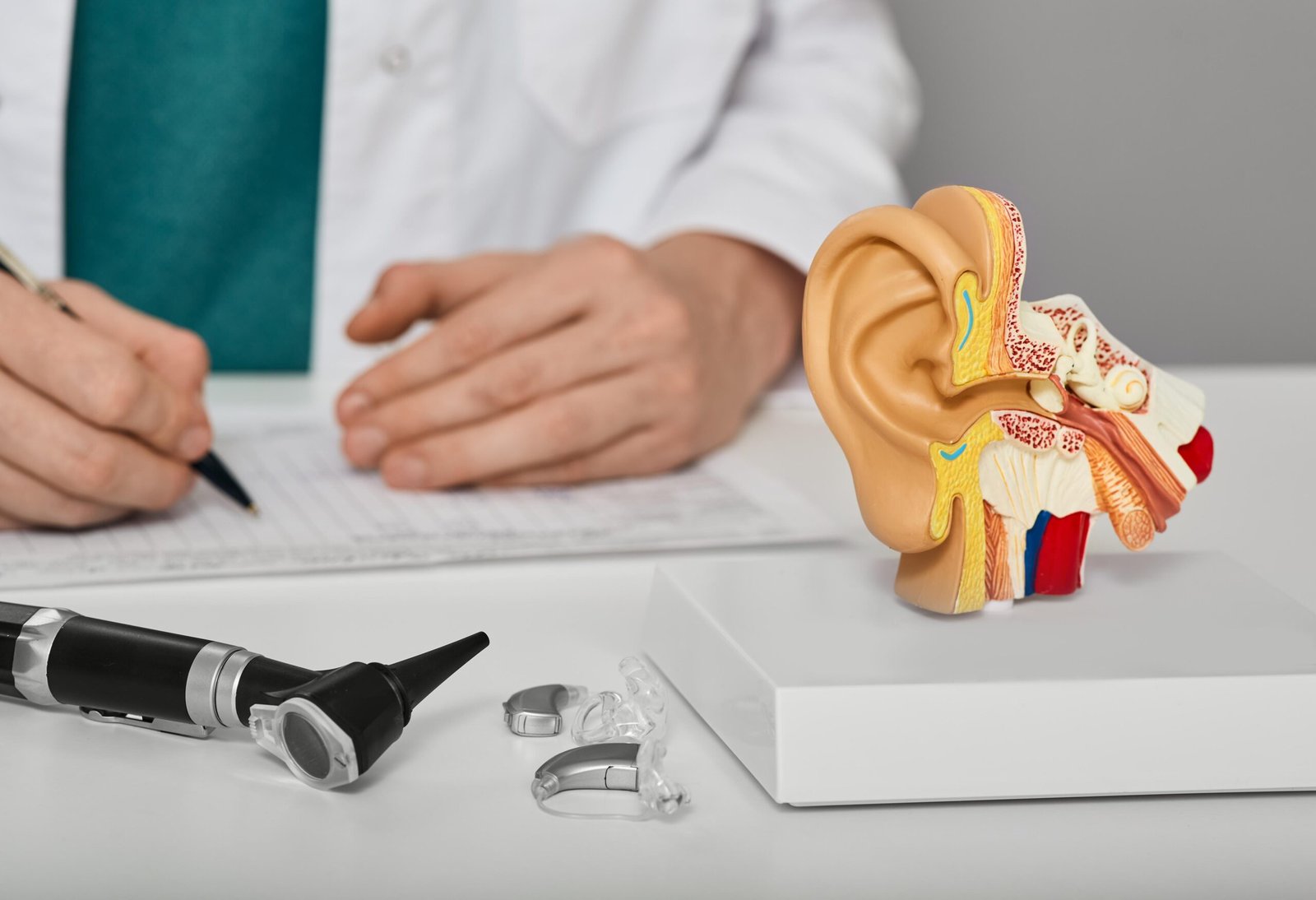
Explain both the head injury and your listening difficulties when you arrange the appointment. Ask which professional should assess the concussion and which hearing-related questions an audiologist can address. Depending on the history and examination, care may involve your primary healthcare provider, audiology, an ear specialist or other members of a concussion team. One appointment may not answer every question.
A conventional hearing test measures particular aspects of hearing; it does not recreate every listening situation. If your results are described as normal, ask what that finding means for the specific problem you reported. Equally, do not assume that normal results prove a particular brain mechanism. A useful explanation should connect the findings with your symptoms and identify what remains uncertain.
Bring any earlier hearing results, the names of clinicians involved in your care, and a current medication list. Mention relevant symptoms that were present before the injury as well as new ones. The comparison helps the clinician understand the change you are concerned about. You can ask about conventional hearing tests at Novasound when arranging your visit.
Make the visit easier to follow
If hyperacusis after concussion makes a busy reception area difficult, tell the clinic before arrival. Ask whether a quieter waiting arrangement or a written summary is possible. During the visit, explain your current sound comfort and ask how to signal that you need a pause. Assessment should be discussed with you; you should not feel obliged to tolerate a painful sound without speaking up.
Consider writing your three main questions at the top of your notes: What are we assessing? What do the findings suggest? What should happen next? With your agreement, a support person can help remember the discussion. Before leaving, check who will receive the results and whether you need to arrange follow-up yourself.
Discuss everyday sound and hearing protection
Managing hyperacusis after concussion requires a distinction between genuinely hazardous noise and ordinary sound that currently feels difficult. Continue to use appropriate hearing protection for hazardous exposure. Do not use an article about sound sensitivity as permission to ignore workplace hearing-safety requirements or to stand close to loud speakers.
The NHS advises against wearing earplugs or earmuffs all the time or avoiding sound completely, while recognizing that short-term protection can help in very noisy environments. Its hyperacusis guidance also says to stop sound therapy and seek medical advice if it causes pain or uncomfortable loudness. Discuss these principles with your clinician, especially if you experience pain or prolonged setbacks.
Ask for a plan that addresses real situations rather than a blanket instruction to use protection everywhere or nowhere. For instance, the questions for a construction workplace are different from those for a quiet home office. Tell the clinician which devices you use, when you use them and what happens when you remove them. Do not abruptly change a plan that a treating professional has given you without discussing the concern.
Questions for a personalized sound plan
- Which environments require protection for hearing safety?
- When might temporary noise reduction help me participate?
- What should I do if a sound causes pain?
- How will we decide whether an activity is appropriate?
- Who should I contact if symptoms worsen afterward?
A useful plan is understandable enough that you can explain it to a family member. If advice seems contradictory, ask the clinicians involved to clarify the purpose and limits of each recommendation. The goal is safer participation and appropriate protection, with your symptoms taken seriously.
Make daily activities more manageable
Choose a meaningful activity to discuss with your clinician: sharing a meal, speaking with a colleague, attending a class or doing the grocery shopping. Describe the part that is difficult rather than treating the whole activity as one problem. A supermarket might involve music, announcements, checkout beeps, visual movement and a long visit. That detail helps a care team understand what support you need.
For hyperacusis after concussion, practical accommodations can be a useful discussion alongside treatment. Examples to request include a quieter meeting space, fewer competing conversations, written instructions, advance notice of noisy tasks or permission to take a break. Availability depends on the setting, and workplace or school arrangements should be agreed with the relevant people.
Try a clear request such as, “I would like to join the meeting. Could we turn off the background music and send the key points in writing?” This describes the barrier and the adjustment. You do not have to share detailed medical information with everyone to explain a practical need. A treating clinician can advise whether formal documentation would help.
Keep an activity plan specific
Write down the activity, the setting, who can help and the agreed exit or break option. Discuss how the plan fits with your wider concussion recovery. Returning to a noisy sport, driving, operating equipment or resuming safety-critical work involves considerations beyond sound tolerance. Obtain the appropriate medical guidance rather than using comfort with sound as the only clearance test.
It may help to explain hyperacusis after concussion to family members using an ordinary example: a volume that feels acceptable to them may feel overwhelming to you. Ask them to check before switching on a loud appliance nearby. At the same time, agree on practical household routines together so that support remains realistic and predictable.
Explore individualized treatment options
Treatment for hyperacusis after concussion should follow assessment and reflect the problems identified. Ask what each proposed treatment is intended to change, what evidence supports it, and how its effects will be reviewed. Care for hyperacusis after concussion can include education, carefully selected sound therapy and psychological support such as cognitive behavioural therapy when appropriate. Addressing distress does not mean that symptoms are imaginary.
The ANZ Concussion Guidelines on sensory sensitivity describe graduated exposure with attention to symptom tolerance and avoidance of significant or prolonged worsening. This is a general clinical principle, not a personalized instruction to increase volume or continue through pain. Ask a qualified clinician how it applies to your presentation.
When discussing sound therapy, clarify the type of sound, its purpose, how you control it and the stopping rules. A generic internet recording or another person’s exercise schedule is not a substitute for that discussion. More intensity is not automatically better. If your plan for hyperacusis after concussion is unclear, ask for written instructions before attempting it at home.
Agree on the boundaries before starting
Ask which symptoms should prompt a pause, a call to the clinic or a medical review. Also clarify whether other symptoms, such as migraine, sleep difficulties or dizziness, need separate assessment. Hyperacusis after concussion can be one part of a broader recovery picture, so it is helpful for the professionals involved to understand the whole plan.
Discuss your preferences and practical limits. If a daily task is difficult to fit around work, caregiving or other appointments, say so. A plan that is realistic and clearly understood is easier to review than a schedule that exists only on paper. You should know whom to contact if you cannot follow the agreed instructions.
Understand the Novasound rehabilitation program
Novasound describes an eight-week hyperacusis rehabilitation program with weekly individual appointments, gentle sound therapy, graded listening activities, calming strategies and progress review. The existing program description includes short home activities of approximately 10–20 minutes. Confirm the current format, availability and suitability directly with the clinic; these details are not a universal prescription.
For someone seeking help with hyperacusis after concussion, the initial conversation should establish whether this program matches the assessed needs. Ask how the clinic coordinates with your concussion healthcare provider and when it would recommend another service. A scheduled course describes the organization of care, not a guaranteed result or a fixed recovery deadline.
| Program topic | What to clarify before enrolling |
|---|---|
| Individual appointments | Who provides care and how your goals are agreed. |
| Sound activities | How starting levels, comfort and stopping rules are selected. |
| Home practice | Which instructions apply to you and how to report difficulties. |
| Progress review | How the plan changes if benefit is limited or symptoms worsen. |
Prepare practical questions about appointment length, fees, insurance documentation and cancellation arrangements. Ask whether the proposed assessment or treatment is included in a package or billed separately. Clear information helps you decide whether the service fits your circumstances without relying on an assumed promise of recovery.
If you are booking for a child or teenager, explain their age and school situation in advance and ask about age-appropriate assessment and referral. Adult concussion advice should not automatically be applied to a child. Tell the clinic who is responsible for the child’s medical concussion follow-up.
Review progress in hyperacusis after concussion
Agree on what improvement would mean in your own life. That might be following a conversation more comfortably, participating in a meeting with agreed support or feeling more confident about an ordinary household task. A goal should describe an activity you value rather than just a number on a questionnaire or the ability to endure louder sound.
At follow-up, compare similar situations where possible. Note what changed in the setting, the activity and any support you used. For example, a shorter meeting in a quiet room is different from a long meeting in a busy café. Reporting that context helps the clinician interpret your experience without attributing every change to a single treatment.
Recovery expectations for hyperacusis after concussion should remain individual. Ask when your care plan will be reconsidered if improvement is limited, symptoms change or participation becomes harder. A setback is a reason to communicate and reassess the plan; it is not proof that you failed an exercise or that you should push harder.
Leave each review with a clear next step
Before the appointment ends, summarize what you understood: the current explanation, the plan until the next visit, and the reason to seek earlier help. Request clarification of unfamiliar terms. If you receive advice from several professionals, keep an updated written summary so that changes can be discussed consistently.
People managing hyperacusis after concussion often have questions about accompanying tinnitus. Our article on tinnitus after concussion provides related reading. Ringing, loudness intolerance and difficulty hearing speech are different experiences to report, even when they happen together. Mention each concern rather than assuming one label explains everything.
Frequently asked questions about hyperacusis after concussion
Can everyday noise feel too loud after a concussion?
Yes. Noise sensitivity is a recognized concussion symptom. Tell your healthcare provider when it started and how it affects daily activities. Assessment helps determine whether hyperacusis or another description best fits your symptoms and what follow-up is appropriate.
Does a normal hearing test mean there is no problem?
No. Ask what the particular test assessed and how its findings relate to your listening difficulty. Your symptoms still deserve a clear explanation. A normal result by itself does not establish the cause of hyperacusis after concussion.
Should I keep practising if sound causes pain?
Do not force painful sound exposure. Stop the activity and contact the treating professional for advice. Ask for explicit stopping rules before beginning any listening program, including what to do if symptoms remain worse afterward.
Will an eight-week program cure the condition?
A program length is not a cure guarantee. Suitability, goals and response vary. Ask what outcomes are realistic for your assessed needs, how progress is reviewed and what options remain if the initial plan does not help.
How do I arrange help in Halifax?
Contact Novasound to discuss an appointment for hyperacusis after concussion and explain any current medical care. Ask which assessment is appropriate and whether another referral is needed. Use emergency services for the warning signs described above rather than waiting for a routine appointment.
Arrange a discussion with Novasound
For more information, see our hyperacusis care page. Bring your main questions and a brief description of the situations you want help with. This article is general education; your care plan should be based on your own assessment.
Ready to take the next step?
Book Appointment
#22, 2625 Joseph Howe Drive, Halifax, NS
Phone: 902-444-7788