Article Summary: Dizziness When Rolling Over in Bed
Brief spinning when rolling over in bed or changing head position can occur with BPPV, an inner-ear condition involving displaced crystals. Similar symptoms can have other causes, so assessment is important. This article explains common triggers, positional testing, canalith repositioning manoeuvres, recovery and reassessment when symptoms return. Treatment should match the findings and the individual’s health and mobility. It also outlines warning signs that require urgent medical care and how to enquire about vestibular assessment at Novasound in Halifax.
Dizziness When Rolling Over in Bed? Understanding BPPV
You roll over in bed, look up at a shelf or bend down to pick something up—and suddenly the room seems to spin.
This pattern can occur with benign paroxysmal positional vertigo, commonly called BPPV. It is a common inner-ear condition that causes brief episodes of spinning triggered by particular changes in head position. Although the sensation can be alarming, appropriate assessment and treatment can often help.
What Causes BPPV?
Your inner ear contains tiny calcium carbonate crystals called otoconia. Normally, these crystals help your body detect gravity and movement.
BPPV develops when some crystals become displaced and enter one of the semicircular canals—the structures that detect head rotation. When your head changes position, the displaced crystals can move and send misleading motion signals to your brain. This produces the sensation that you or your surroundings are spinning.
What Does BPPV Feel Like?
Typical symptoms include brief spinning episodes when:
Rolling over in bed.
Lying down or sitting up from bed.
Looking upward.
Bending forward.
The spinning usually settles within a minute once the head is still. Some people also experience nausea or feel mildly unsteady between episodes.
However, dizziness triggered by movement does not automatically mean BPPV. Other conditions can produce similar symptoms, so an assessment is important—particularly when dizziness is new or its pattern changes.
How Is BPPV Diagnosed?
An assessment begins with questions about your symptoms: what triggers them, how long they last and whether there are other concerns.
A clinician may then perform positional tests, such as the Dix–Hallpike test or supine roll test, while observing your eye movements. The pattern helps identify the affected ear and semicircular canal.
A full battery of vestibular tests or a brain scan is not routinely necessary when the findings clearly match BPPV. Additional investigations may be appropriate when symptoms or examination findings suggest another cause.
How Is BPPV Treated?
Treatment commonly involves a canalith repositioning manoeuvre: a carefully selected sequence of head and body movements that guides the displaced crystals out of the affected canal.
The Epley manoeuvre is commonly used for posterior-canal BPPV. Other canal types require different movements, which is why identifying the affected canal matters. Dizziness medication does not reposition the crystals and is not recommended as routine treatment for BPPV. Before trying an online manoeuvre, seek guidance about the correct technique and whether it is suitable for your health and mobility.
How Long Does BPPV Recovery Take?
In many cases, positional vertigo improves quickly after a targeted repositioning manoeuvre. Some patients experience complete relief in just one or two clinical sessions.
However, it is normal to feel light residue unsteadiness for a few days while your vestibular system readjusts. Staying hydrated and avoiding sudden, jerky head turns during the initial days after treatment can support your recovery.
What If the Dizziness Comes Back?
BPPV can recur over time. Returning symptoms deserve reassessment rather than an assumption that the same ear or canal is affected again.
If dizziness continues after treatment, follow-up can check for unresolved BPPV or another balance condition. Clinical guidelines recommend reassessment within one month after initial treatment or observation.
When Should You Seek Urgent Medical Care?
Call 911 if dizziness occurs with new weakness, difficulty speaking, double vision, inability to stand, or a sudden severe headache.
New, severe dizziness that continues for hours—especially with vomiting or difficulty walking—also requires emergency assessment, even without these additional symptoms. Do not assume it is BPPV.
Vestibular Assessment in Halifax
If rolling over in bed or changing head position repeatedly triggers spinning, understanding the cause is the first step toward appropriate care. Contact Novasound Hearing & Balance Center in Halifax to book a vestibular assessment and discuss the next steps for your dizziness and balance concerns.
Further Reading: Dizziness, Vertigo and Treatment
For additional background, explore this educational resource from the Vestibular Disorders Association (VeDA):
The guide explains how medicines may be used for symptom relief or prevention in different vestibular conditions, together with potential limitations and side effects. It provides broader context for treatment discussions; it is not a personalized prescription or a substitute for assessment of suspected BPPV.
Use the resource to prepare questions for your clinician about which options are appropriate for your diagnosis. Do not start, stop or change medication based solely on an online article.
Understanding Dizziness and Preparing for an Assessment
Understanding dizziness begins with describing the experience clearly. The article focuses on brief spinning associated with changes in head position, including rolling over in bed. Its central message is that a familiar trigger can suggest a pattern worth assessing, but does not establish a diagnosis by itself. Readers can use the discussion to organize questions for a clinician instead of treating a description on a website as confirmation of BPPV. Describing what actually happened is more useful than trying to choose a medical label before an appointment.
Different people may use the word dizziness to describe different experiences. When explaining your concerns, use your own words and identify anything you find difficult to describe. You might want to explain whether the surroundings seemed to move, whether you felt unsteady, or whether the experience was different from previous episodes. These descriptions are starting points for a conversation, not a checklist that confirms a particular condition. If several sensations occurred, record them separately instead of assuming they all have the same explanation.
Describe the Timing and Circumstances
When preparing to discuss dizziness, distinguish the start of the overall problem from the length of each episode. A person may have noticed symptoms several days ago while experiencing individual spells that are much shorter. Recording those two details separately can make an account easier to follow. If timing is uncertain, an estimate should be described as an estimate. There is no need to invent precision or repeat a movement to complete a note. An honest description of what you remember is sufficient to begin the discussion.
Consider writing a simple timeline that includes when the symptoms first appeared, what you were doing, and whether the experience changed afterward. Keep the strongest sensation separate from anything you noticed later. For example, you may have questions about the episode itself and different questions about how you felt during the rest of the day. A timeline does not need to include every minute or every activity. Its purpose is to help communicate the sequence of events without turning your observations into a self-diagnosis.
The circumstances surrounding an episode can also be described in ordinary language. Note what happened during your normal routine rather than deliberately trying to reproduce symptoms. If you remember turning in bed but cannot remember the direction, say that the direction is uncertain. If the symptoms happened in more than one setting, explain each setting separately. Avoid changing an uncertain memory into a definite statement simply because it appears to match something you have read. Your clinician can help clarify which details matter.
Use the Explanation of BPPV as Background
The section on inner ear crystals explains why head position matters in BPPV. The important distinction is between understanding the mechanism and identifying the cause of an individual person’s dizziness. An educational explanation cannot determine which ear or canal is involved. That is why the article connects the description of positional symptoms with assessment rather than presenting the explanation as a self-diagnosis. Questions about this distinction can be brought to an appointment, especially when an online description seems familiar but does not explain every part of your experience.
Medical terminology can make an unfamiliar experience easier to discuss, but it should not replace your own observations. You do not need to memorize the names of inner ear structures or examination procedures before requesting an appointment. If a term appears in a report or previous treatment instructions, bring the original wording when possible. Ask what the term means in your circumstances and whether it describes a confirmed finding, a possibility being considered, or a general explanation. Keeping those categories separate can make the conversation clearer.
Understand the Purpose of the Examination
The diagnostic discussion separates a symptom history from an examination. Readers can describe what they noticed, while a clinician considers the findings and decides what they mean. A useful question is what a proposed positional test is intended to establish. Another is what the next step would be if the findings do not fit the expected pattern. These questions help clarify the reasoning behind a dizziness assessment without assuming that every person needs identical investigations or that one test answers every possible question.
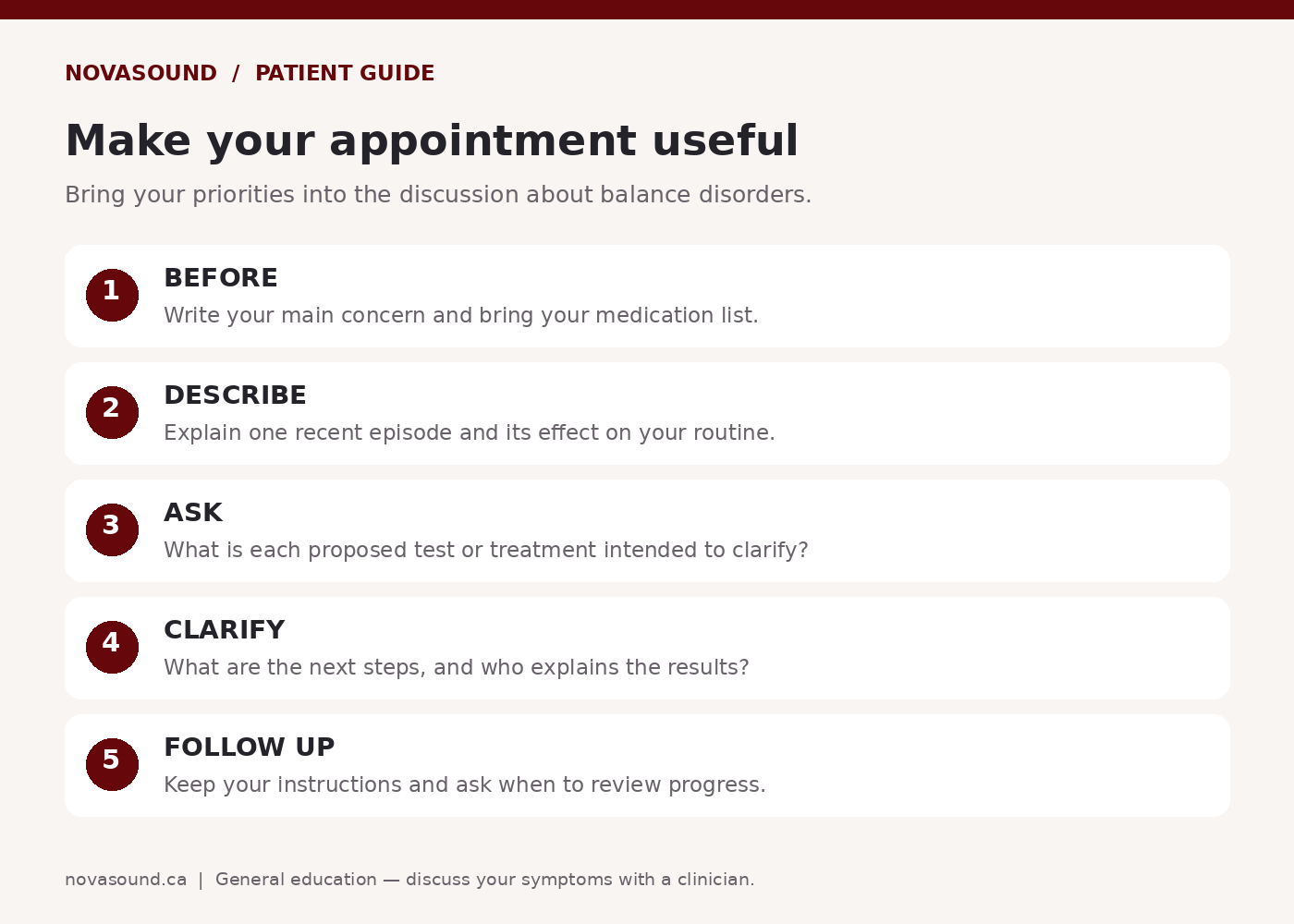
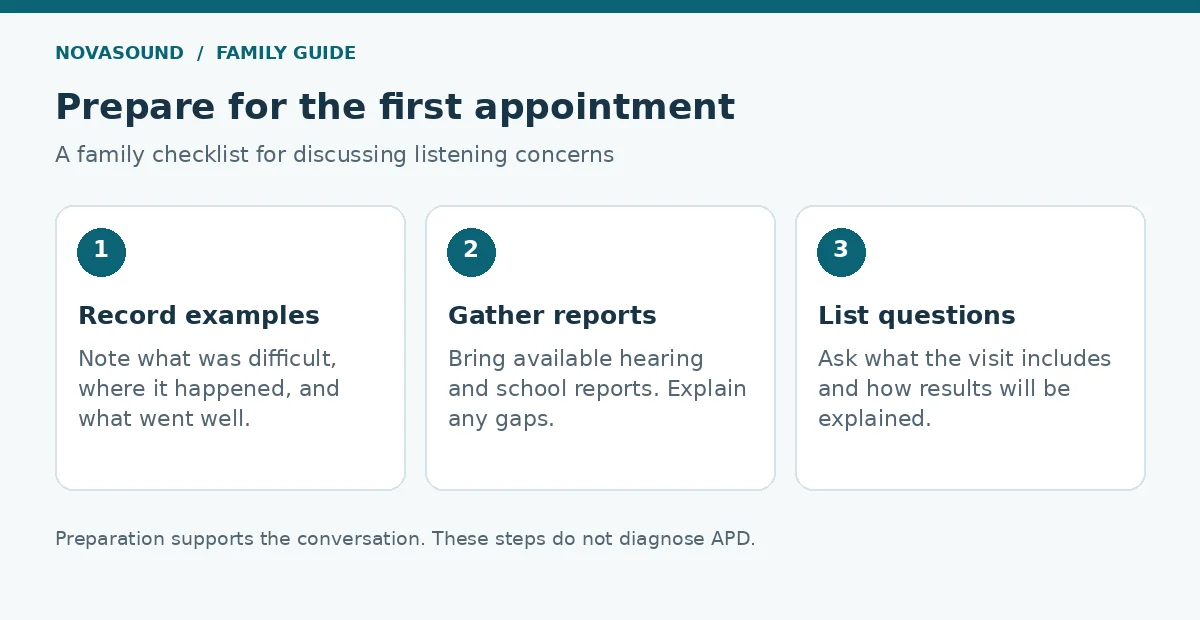
Before an appointment, write down the questions that matter most to you. You may want to understand the purpose of the assessment, what information to bring, or how the results will be explained. Let the clinic know about practical requirements you would like to discuss, and ask whether preparation instructions apply to the appointment you have booked. Do not assume that instructions for another person or another type of examination apply to you. If anything is unclear, request clarification from the service providing your care.
Keep Treatment Information in Context
The treatment section distinguishes repositioning manoeuvres from medication. Readers should not interpret a general description of the Epley manoeuvre as instructions to perform it themselves. The article emphasizes the affected canal, technique, health, and mobility because treatment decisions need context. Someone who has already received instructions can ask for clarification if any step is unclear. Information about dizziness found elsewhere online should be discussed rather than silently combined with an individual treatment plan. A familiar treatment name does not establish that the same approach is appropriate for every episode.
When discussing a treatment recommendation, ask what it is intended to address and how the next steps will be reviewed. Keep a copy of any written instructions and note questions that arise afterward. If the explanation includes unfamiliar language, ask for an explanation in everyday terms. Before leaving, you can summarize the plan in your own words and check that you have understood it correctly. This provides an opportunity to resolve misunderstandings without relying on memory or trying to reconstruct the advice from unrelated online resources.
Prepare Clear Questions About Follow-Up
Follow-up is another theme of the article. A return of dizziness raises questions about what has changed and whether reassessment is needed; it should not automatically be assumed to be exactly the same problem. Notes about the earlier assessment and the current experience may help structure the conversation. Readers can ask when to arrange follow-up, which changes should prompt earlier contact, and how to obtain clarification about advice already provided by their clinician. Record the actual plan you receive rather than filling in missing details with assumptions.
If you attend another appointment, explain what has improved, what remains difficult, and what is new. You do not need to describe the outcome as entirely successful or entirely unsuccessful if your experience is more complicated. A short account of specific changes may be easier to discuss than a general statement that everything feels different. Bring previous instructions or reports when relevant, and identify which questions have not yet been answered. The purpose of these notes is to support the assessment, not to decide the next treatment in advance.
Separate Routine Planning From Urgent Concerns
The urgent care section should remain separate from routine appointment planning. A diary, an online article, or a clinic contact form is not a substitute for emergency assessment when the warning signs described in the article occur. Readers should refer to that section directly rather than relying on a shortened recollection of it. Preparing questions about ordinary dizziness care should never become a reason to postpone help for a new, severe, or concerning change. Completing a worksheet is not a prerequisite for seeking appropriate medical attention.
For routine enquiries, ask the clinic which communication method to use and how follow-up questions are handled. Do not assume that messages submitted through a website are read immediately or that an appointment request provides urgent clinical advice. Keep routine contact information together with the instructions you have received. If you are unsure how a particular instruction applies, seek clarification from an appropriate healthcare professional. General educational material cannot account for every personal circumstance or replace an assessment of a changing situation.
Organize Your Appointment Information
For a visit in Halifax, the article directs readers to Novasound for enquiries about vestibular assessment. A short list of questions can include appointment preparation, relevant records, and practical arrangements. The aim is to make the discussion clear, not to arrive with a predetermined diagnosis. Further reading can provide background vocabulary and context, while the assessment addresses the individual experience. Keep useful questions together so that concerns about dizziness are easier to explain and review during the conversation.
Confirm appointment details directly with the clinic, including the location, any preparation requirements, and the documents you have been asked to bring. If you have accessibility or communication needs, raise them when arranging the visit so you can discuss available arrangements. Keep the confirmation and your question list somewhere convenient. These organizational steps do not determine which tests or treatments you need; they simply help you prepare for a more focused conversation about your symptoms and the next steps recommended for you.
Read Additional Resources Thoughtfully
Further reading is most useful when it helps you form clear questions. Note the title and source of an article you would like to discuss, along with the particular statement you found confusing or relevant. Distinguish general information about vestibular disorders from instructions written specifically for your own care. If two resources appear to disagree, bring the question to your clinician instead of assuming that the newest or most confident explanation must apply to you. Context matters when interpreting information about dizziness.
At the end of your preparation, write a brief personal summary: what you noticed, when it began, how it affects your routine, and what you would like to understand. Keep uncertain details clearly marked as uncertain. You can use this summary to begin the appointment and then add information as questions arise. Afterward, record the agreed next step and any follow-up arrangements. A clear record supports communication while leaving diagnosis and treatment decisions to an appropriate assessment of your individual circumstances.