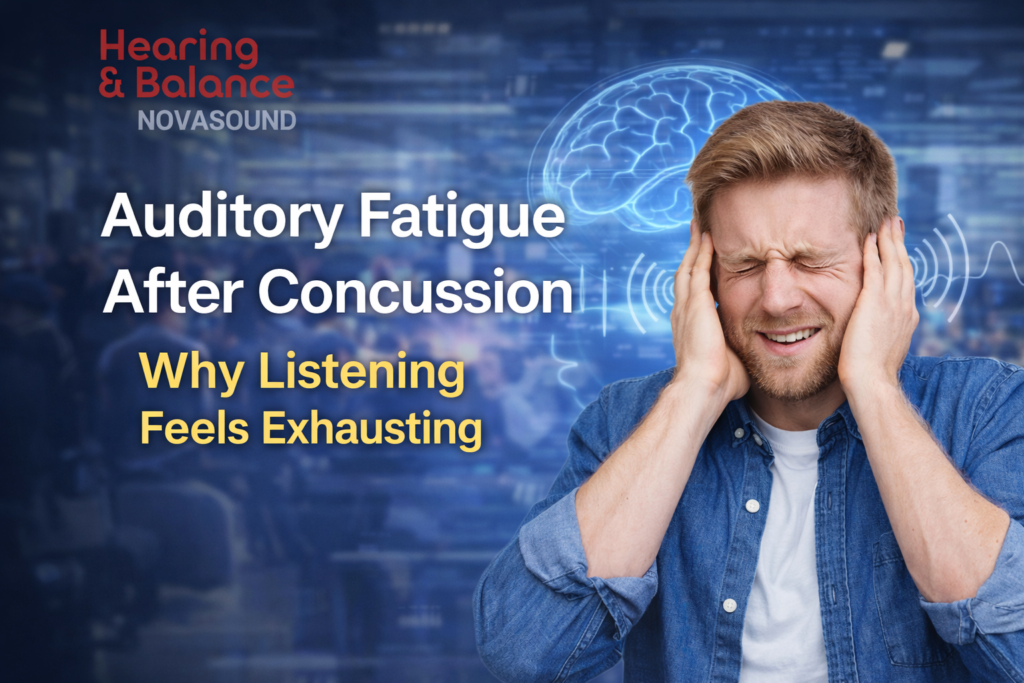

Auditory Processing Disorder After Concussion
Understanding Post-Concussion APD
Auditory Processing Disorder APD is not just something seen in children. Adults who have sustained a concussion or head injury may also experience long-term difficulties in how their brain interprets sounds.
While their hearing may test as normal, they can struggle to process verbal information, particularly in noisy environments or complex listening situations.
Understanding Post-Concussion APD
After a concussion, the brain’s ability to decode and organize sound can be disrupted.
This can lead to challenges such as:
- Trouble focusing on one voice in a crowd
- Difficulty following fast conversations
- Mishearing similar words
- Feeling overwhelmed by background noise
- Increased listening effort and fatigue
For musicians, teachers, healthcare workers, and anyone who relies heavily on auditory input, these issues can significantly affect work, relationships, and daily life.
A recent article from CBC News shares the firsthand experience of an Ottawa woman who struggled with undiagnosed APD after a concussion, highlighting how disruptive and isolating these challenges can be.
Read the CBC article here
Signs of APD After Concussion
- Asking people to repeat themselves often
- Trouble understanding speech over the phone or in noisy places
- Difficulty localizing where sounds are coming from
- Sensitivity to loud or complex environments
- Feeling mentally drained after long conversations or meetings
Impact on Daily Life
Even when hearing thresholds are normal, post-concussion APD can make social interactions and work tasks exhausting.
Individuals may avoid group settings, withdraw from conversations, or feel frustrated by frequent misunderstandings. Over time, this can affect confidence and quality of life.
Assessment and Diagnosis
An audiologist specializing in APD can perform a comprehensive auditory processing evaluation that goes beyond standard hearing tests.
This assessment identifies specific challenges in:
- Competing or degraded speech
- Rapid speech understanding
- Binaural integration processing input from both ears
- Temporal processing timing of sounds
At Novasound Hearing & Balance Center, we offer specialized evaluations to pinpoint how a concussion has impacted auditory processing and tailor recommendations to each individual’s needs.
Treatment and Support Strategies
While APD cannot be “cured,” there are many tools and strategies that can help manage the difficulties.
1. Assistive Technologies
- Remote microphones and FM/DM systems to improve speech clarity
- Noise-cancelling devices or apps for high-noise environments
2. Auditory Training
- Exercises and computer-based programs to strengthen processing skills
- Working with speech-language pathologists on auditory memory, attention, and discrimination
3. Environmental Modifications
- Reducing background noise at home and work
- Using visual supports and written instructions
- Strategic seating in meetings or social settings
4. Counselling and Education
- Helping individuals and families understand APD’s impact
- Teaching compensatory techniques and advocating for accommodations
Living With Auditory Processing Challenges After Concussion
Recovery from a concussion is different for every individual, and auditory processing difficulties may not always appear immediately after the injury.
Some people notice challenges weeks or even months later as they return to work, social environments, or demanding listening situations. Recognizing these changes early can help prevent frustration and reduce long-term communication barriers.
Developing awareness of listening triggers — such as crowded spaces, rapid conversations, or background noise — allows individuals to apply practical coping strategies and seek appropriate professional support.
With proper evaluation, personalized recommendations, and ongoing guidance from audiology specialists, many people experience significant improvement in confidence, communication clarity, and overall quality of life.
How Novasound Can Help
If you’ve experienced a concussion and now notice difficulty processing sounds, you don’t have to struggle alone.
At Novasound Hearing & Balance Center, we specialize in assessing and supporting individuals with APD, including those affected by brain injury.
We work closely with patients to create personalized care plans that address their specific listening challenges and help them regain confidence in communication.
Let’s Take the Next Step Together
Early evaluation and targeted support can make a world of difference in managing APD after concussion.
Contact Novasound Hearing & Balance Center today to schedule your comprehensive assessment and start your journey toward better hearing and balance.
Ready to take the next step?
Book Appointment
#22, 2625 Joseph Howe Drive, Halifax, NS
Phone: 902-444-7788